A few days after the Locarno festival ended, an interview featuring artistic director Giona Nazzaro—conducted by the Swiss outlet Keystone SDA—circulated on social media. In it, he stated, among other things: “The problem is not that Locarno is losing influence in the eyes of film lovers. Rather, it is that distributors sometimes lack curiosity.” Nazzaro’s remark made it clear that rumors regarding the perceived shortcomings of this year’s festival lineup had reached the organizers.
Blaming distributors seems odd; they need films to market, and expecting them to champion titles that—consistent with Locarno’s traditional profile—are neither aimed at nor designed for mass audiences does not seem particularly wise. In reality, markets often pose a challenge for festivals; market participants are interested only in “marketable” films, whereas festivals need not operate within that realm. The relationship between markets and festivals is complex—a topic too vast to delve into here.
However, there was another incident, less official and bordering on gossip: a Locarno programmer took issue with a group of critics known as MOIRÉE—whose motto, visible immediately upon visiting their website, is “Critics’ ratings from film festivals around the world.” Led by filmmaker Blake Williams, this group produces podcasts at the festivals they attend and maintains a grid of film ratings. The programmer’s grievance stemmed from the low scores films premiering at Locarno were receiving; in her view, the critics were being somewhat unfair.
One might assume that the roles of critics and programmers are closely related or even similar; while there is some truth to this, the two professions are separated by far more differences than similarities. While critics are financially and organizationally independent—especially in an era when major media outlets like newspapers and magazines are vanishing—programmers operate within a structured hierarchy. In other words, they have bosses, and not everything that happens at the festivals where they work is determined by them or their personal tastes and ideas about cinema. While critics need only be true to their own integrity, programmers must contend with other factors: fellow programmers and bosses with whom they may not share a vision or taste; politicians constantly demanding that festivals need to be more “populars”; festival committees often composed of people with no knowledge of cinema; budget constraints; rival festivals vying for the same titles; and critics who insist that the past was always better.
The problem may lie in the fact that, while festivals have successfully adapted to changing times and continued their mission, the role of the critic today occupies a very peculiar space. It is not that criticism has disappeared or is on the verge of doing so—quite the opposite: it has fragmented into millions of opinions and texts circulating online, making it increasingly difficult to distinguish the good from the bad, or serious writing from mere publicity. The pressure to generate views (clicks) imposed by modern media drives most critics to discuss the same subjects and titles, leading to a focus on—and the proliferation of discourse regarding—films that are already highly visible and easily accessible to everyone. Essentially, critics find themselves compelled to talk about the same movie over and over again.
Locarno—like most festivals that build their programming around world premieres—faces a number of challenges. First is the growing dominance of festivals like Cannes and, to a lesser extent, Venice; these events seem to want it all and, thanks to their financial clout, usually get it. It is not just that established big-name directors are unwilling to hold world premieres at festivals in their home countries (Lee Chang-dong wouldn’t premiere at a Korean festival, nor would Lucrecia Martel at an Argentine one); young, emerging filmmakers also want to secure their career futures by aiming for the biggest festivals possible. A Locarno programmer told me that quite a few films, upon receiving an official invitation from Locarno, use this invitation to pressure Venice into offering what—at least in the filmmakers’ eyes—amounts to an upgrade. And we are talking about Locarno, arguably one of the top five or six festivals in the world. This highlights something most outsiders don’t realize: festivals—or at least the majority of them, as previously mentioned—do not work with the films they “want,” but rather with the ones they “can get.”
Furthermore, despite the perpetual crises facing the film world and its industries, more movies are being produced today than ever before in history. That universe is vast and unfathomable (I know this from my own experience as a programmer). Thousands upon thousands of films are seeking a premiere venue, yet their quality and unique attributes often get lost amidst the sheer volume of available titles.
The glory days festivals once enjoyed—say, in the late 1990s and early 2000s, right around the time the Jeonju IFF was founded—are now a thing of the past. During that era, festivals established a canon that persists to this day, seemingly without having undergone any real renewal. Even today, we still discuss the names that established themselves back then, and few others have joined the list. In Korea, figures like Hong Sang-soo, Lee Chang-dong, and Park Chan-wook remain vital, winning international awards and serving as key points of reference for the rest of the world. A similar situation exists in Argentina with filmmakers such as Lucrecia Martel, Lisandro Alonso, and Mariano Llinás. Of course, new names have emerged over the years, but not many—and few with such powerful bodies of work. I used these two countries close to me as examples, but to those established names, we could add others who have maintained active careers since that era: Pedro Costa, Lav Diaz, Tsai Ming-liang, James Benning, and so on.
Defining the role that both critics and programmers should play in these changing times is a complex matter. One task they certainly ought to undertake is giving greater visibility to works that lack it. In an era when major studios pour vast resources into the production and marketing of their blockbusters, what is the point of writing—for the umpteenth time—about a film like Hope (2026)? Their task, then, is to highlight titles that tend to remain overlooked, whether in commercial cinemas or festival lineups—programmers doing so through their festival selections, and critics through their writing. For instance…
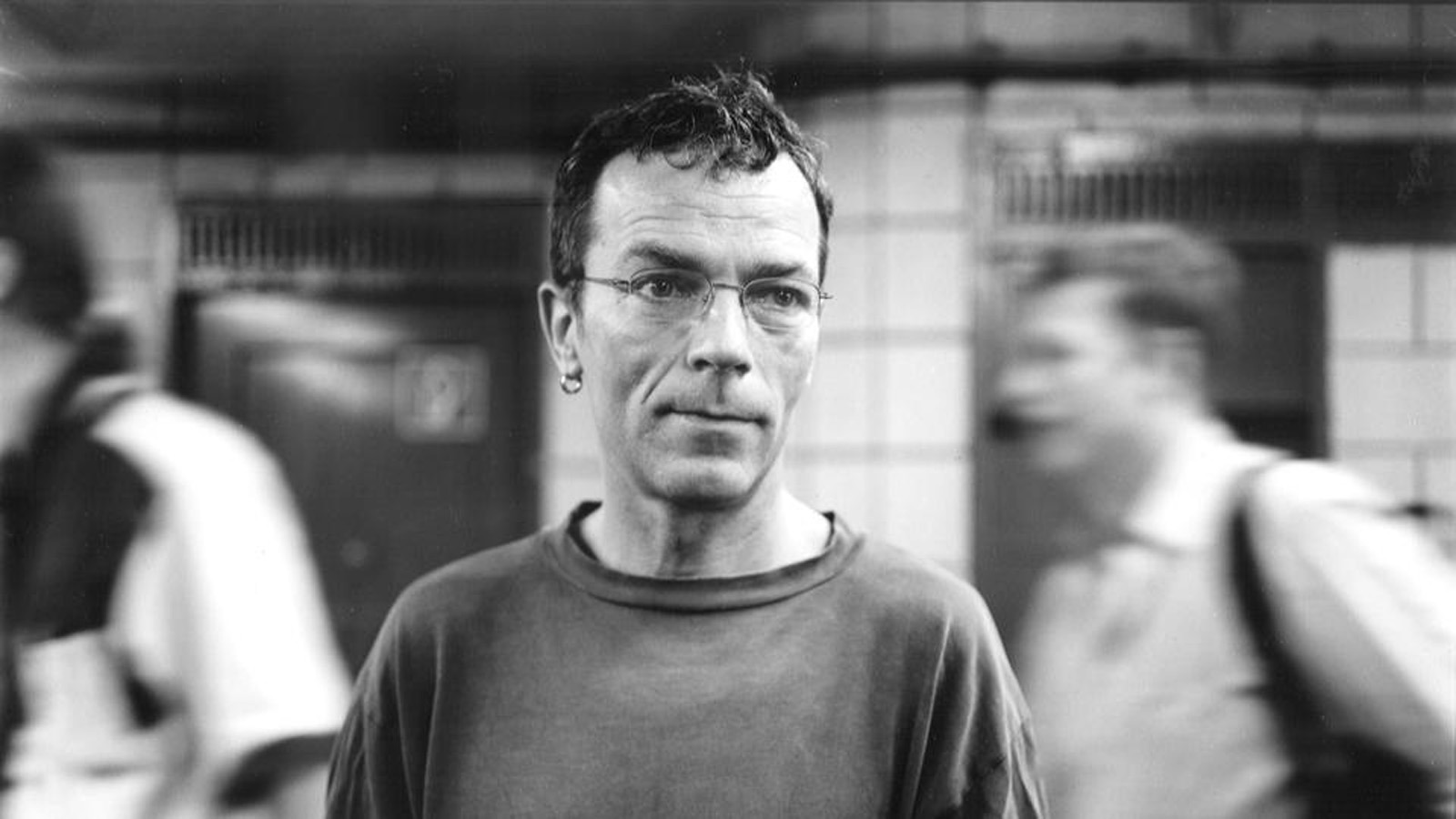
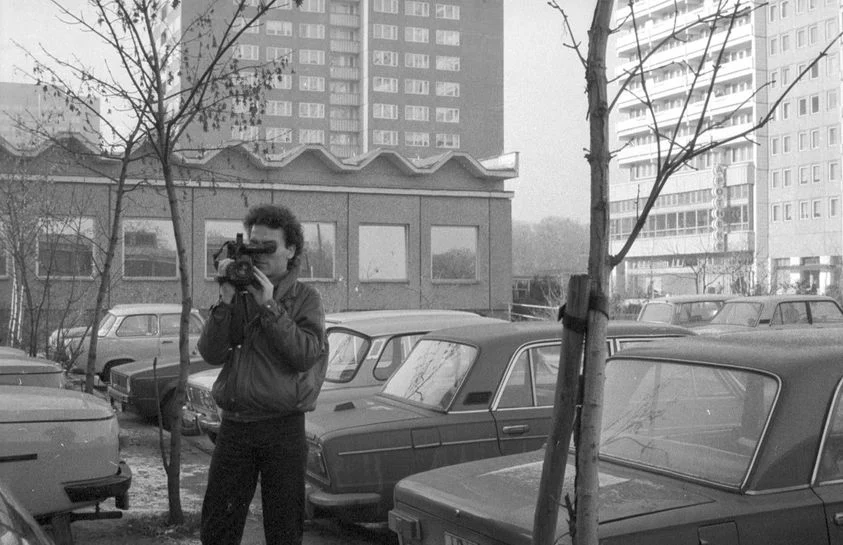
Übergang (Transition, 2026) was the final project of German documentarian Thomas Heise; due to his untimely death, the project was finally made by his collaborators, Peter Badel and Chris Wright. The documentary, which premiered in Locarno, recounts the filmmaker’s life, tracing his youth in a divided Germany and the emergence of cinema as a refuge during those dark times when police surveillance oppressed the lives of citizens. His story is intertwined with the changes sweeping his country, including the fall of the Berlin Wall, as well as with his own intimate, personal transformations.
For those unfamiliar with the director’s life and work, the film serves as a gateway to a filmography that is as rigorous as it is demanding, and always political in both form and discourse. For those who do know the director, however, it functions as a moving farewell letter to one of the few intellectuals who chose cinema as a medium of expression. Works of art are not usually didactic, yet they sometimes leave us with a lesson. Midway through the film, we hear the story of a young man who wants to attend the classes Thomas Heise was teaching at the time but cannot get in due to enrollment limits. Heise then writes him a letter saying:
“I’m sorry, but I cannot help you. What you can do, however, is to begin. Start from the beginning, and please, do not talk about art. You will discover what art is in time; don’t worry about that for now. Be independent. Leave your circle of acquaintances behind. Start working if you are interested in cinema. But ask yourself: what exactly is this interest? Ask yourself where this interest comes from. Examine yourself. Why should your images be added to the endless stream of images produced every day? Take this as a starting point. Work alone. Study every object before transforming it into an image. Photograph places that are unfamiliar to you. Never leave home without a notebook. Write down what you see and what you hear. The language of bureaucracy. The phrases spoken in the streets and in bars. In arguments and in love. Use every penny you earn to learn something. Never expect financial security. Be happy with that, because it isn’t going to change. Look for work in a factory—anywhere. Photograph the exhausted workers at the end of their shift. But photograph their bosses and the customers, too. Walk through the city at night. See what others do not see. Be patient. Talk to people you don’t know. Ask them about their lives. Keep moving. And when you go on vacation, go where no one else wants to go. […] Perhaps these lines also describe the classes I teach. I cannot give you any more advice for now. But do these things for a year—or better yet, two. Apply for my classes again when you are certain you have something important to say. An experience. Experiences you have lived through. A vision of the world. Best wishes. I’ll be waiting for you.”
In that letter, Heise speaks to and advises a potential future filmmaker, but his words also seem to hold a lesson for film critics and programmers—and, why not, maybe even for the spectators.