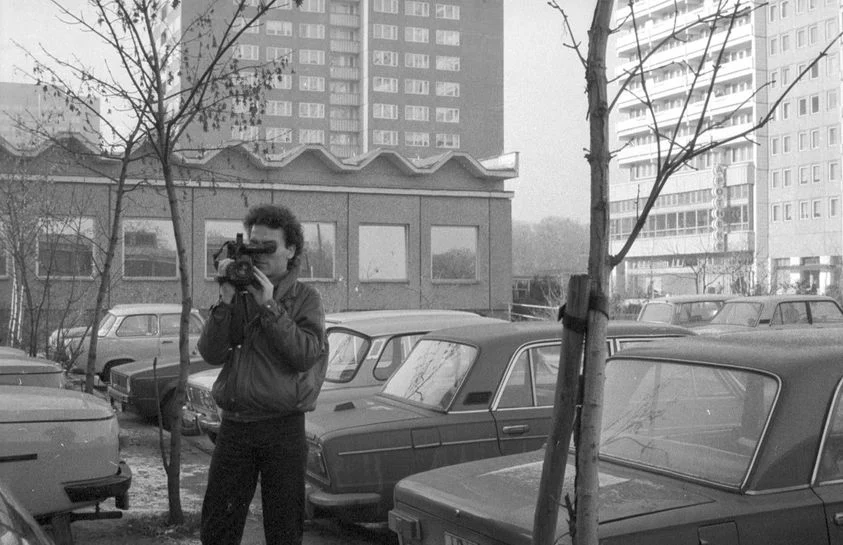
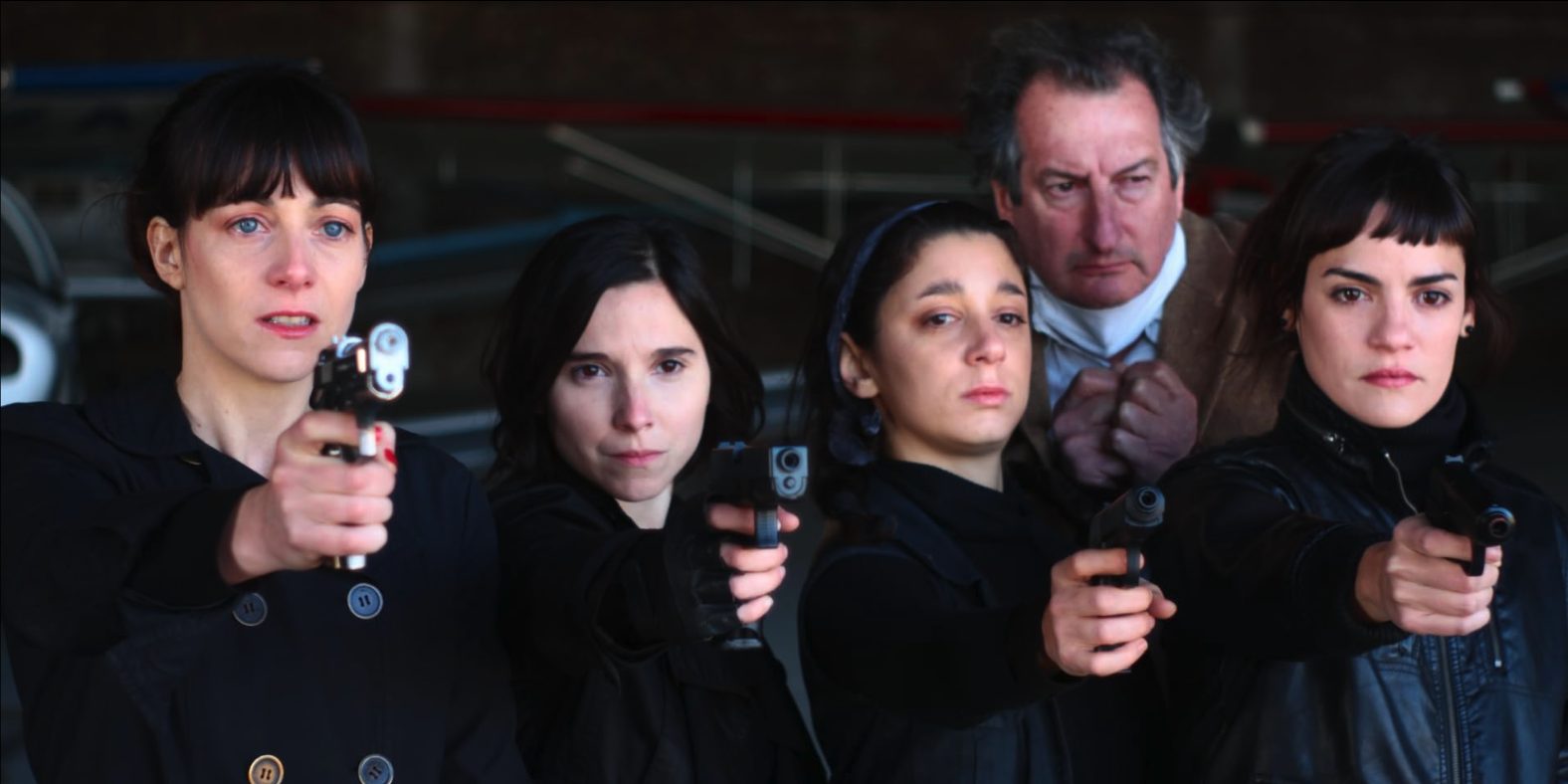
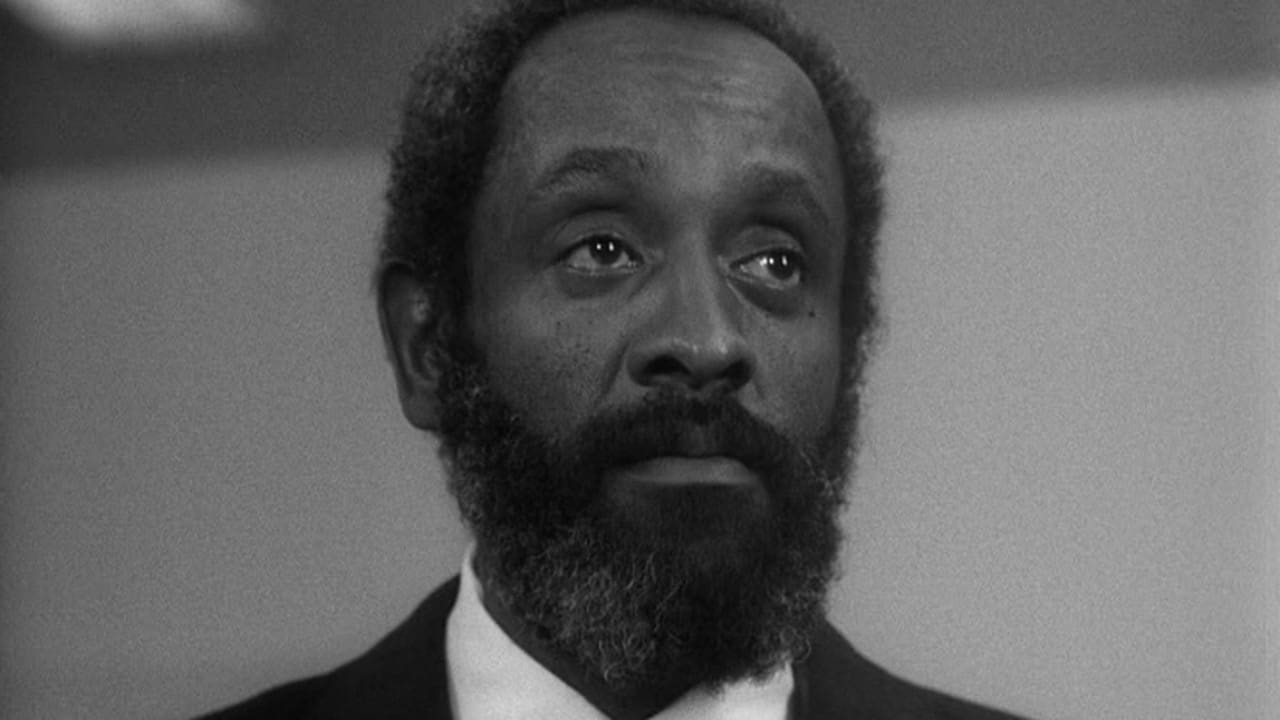
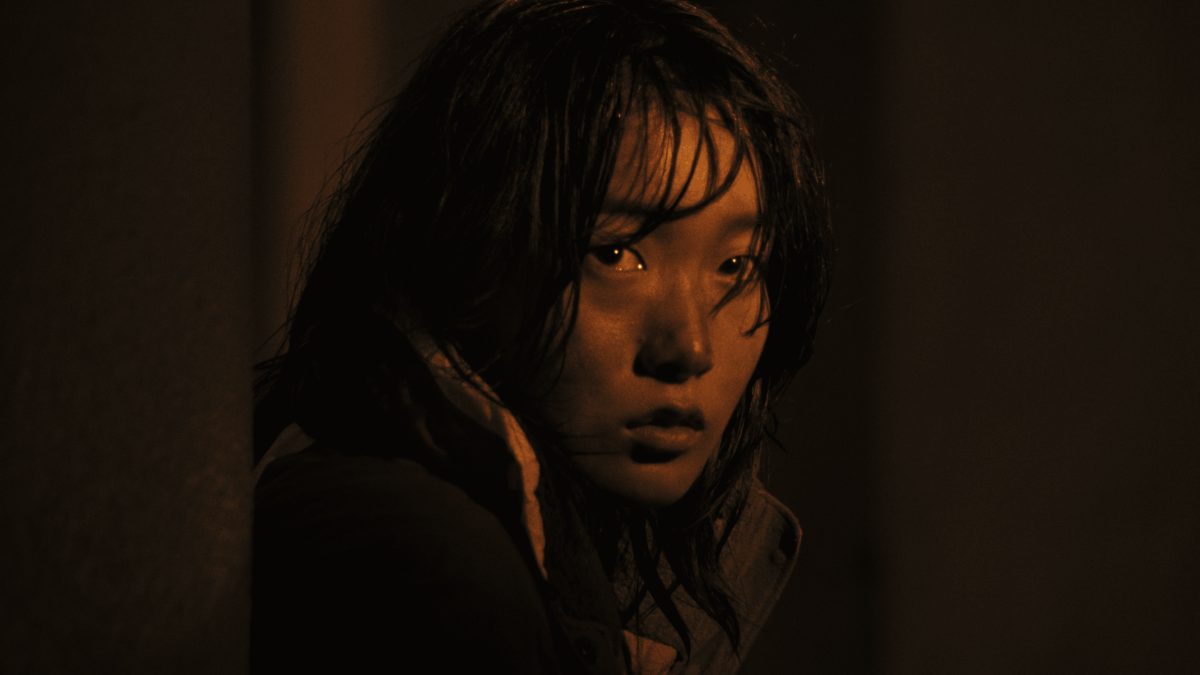
This article is part of Pere Portabella: The Multiform Filmmaker, the Guest Cinephile programme of the 2026 JEONJU International Film Festival, itself integrated within Acció Portabella, the international initiative marking the filmmaker’s centenary through screenings, programmes, seminars, and publications in several countries. Taking as its point of departure the selection of films presented in JEONJU to foreground the multiform character of his cinema, these pages offer a reflection on Portabella’s politics of form: a way of understanding cinema not merely as aesthetic expression, but as an intervention into the ways we see, think, and inhabit the world.1
Cinema as a Way of Taking a Position in the World
Pere Portabella (Figueres, 1927) is one of the decisive filmmakers of European cinema. His importance—exemplified in transformative films such as Vampir-Cuadecuc (1970), Umbracle (1972), General Report (1976), Warsaw Bridge (1989) or Silence before Bach (2007)—lies in the fact that, across more than sixty years of practice, he has sustained a cinematographic position from which to think the present. His cinema has shown, film after film, that our way of looking at the world is not transformed by changing the subject or adapting to trends, but by intervening in the shifting codes that organise what is visible and what is sayable. “Form,” in him, is neither wrapping nor abstraction: it is the battleground where it is decided, prior to any explicit debate, what can still appear and articulate itself from the very practice of cinema.
His gaze can be recognised, from his earliest interventions, by a double refusal: it neither indulges in aesthetics nor settles for denunciation. Instead, it seeks forms capable of deprogramming the hegemonic signs that each era naturalises. Under Francoism, those signs were those of authoritarian castration and a retrograde presumption of order. During the Transition, they were those of the dictates of the international financial system and the pacification of conflicts. Today, they are those of unchecked capitalism, characterised by normalisation through saturation and the dismantling of every capacity for alternativity. In these three moments, Portabella starts from a single stance: “to operate radically on linguistic codes is an unrenounceable task in order to transform things.”2 Cinema, in him, is the name of that task.
The Suspension of a Blank Page
Every film by Portabella begins, as he relates, before a challenge. “To conceive a film I always need to place myself before a blank sheet. It is the shortest path to arriving, in the best possible conditions, at the blank and empty screen”; “the blank page is synonymous with creative freedom, with the fact that everything is possible. It is the beginning.”3 And he adds: “Models should never be in front of you; you have to turn your back on them.”4 The blank does not name a purity prior to language nor a wait for inspiration: it is a precise critical operation. The filmmaker withdraws the credit that inherited forms claim to mediate between him and his world, and inaugurates the very possibility of a saying that is not already handed over to the syntax of the established order.
The dialogue with Jacques Rancière becomes fruitful here. In reading Schiller’s “aesthetic state” as a “pure instance of suspension, a moment when form is experienced for itself,”5 Rancière allows us to think of that suspension as something more than an ornamental withdrawal: an interval in which the hierarchies that order the sensible can be deactivated—who is visible, who can take the floor, what counts as experience. If, for Rancière, politics does not consist in opposing opinions within an already distributed map, but in altering the very distribution of the visible, the sayable, and the thinkable, Portabella’s blank page can be read as an analogous operation: the moment when inherited codes cease to decide in advance what an image can be, what a narrative can be, and what place the spectator occupies.
Production as Contestation
Before being a filmmaker, Portabella was the producer of three works fundamental to Spanish cinematic modernity. Under the label of Films 59, his production company, he brought into being Carlos Saura’s Los golfos (The Delinquents, 1959), Marco Ferreri’s El cochecito (The Little Coach, 1960), and Luis Buñuel’s Viridiana (1961), and he did so as an intervention into the regime’s worldview-infrastructure: from within its media apparatus. “The great contestation was to produce three films in the 1960s. That was my personal declaration”6; and he clarifies, “if I got involved in those films, it was out of ethical commitment: I do not separate it from political activism.”7 A series of operations charged with a formal challenge, in which he set out to explore “new forms of production and a new morphology of the image, a liberated facture, new airs, changes of gaze.”8
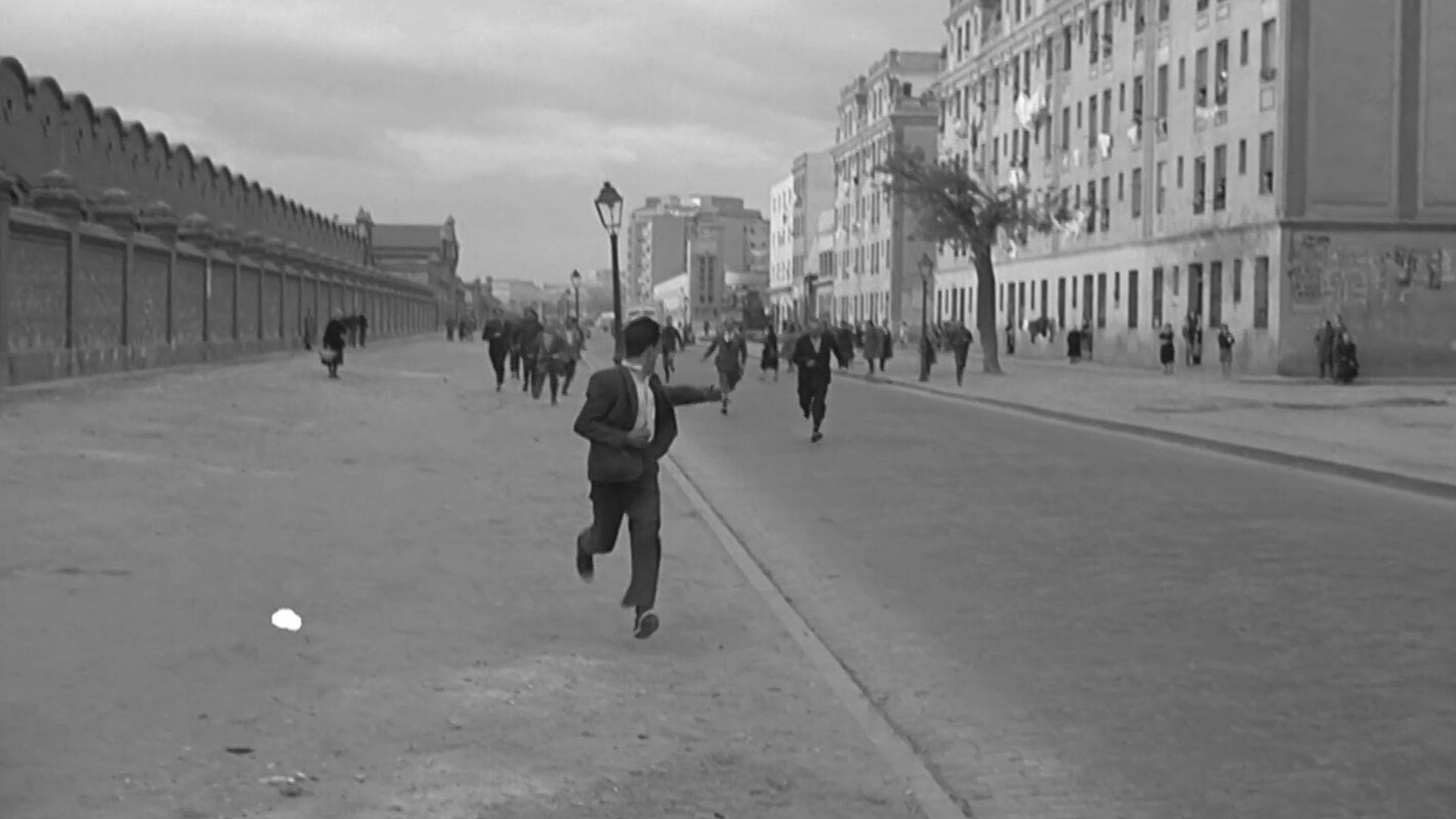
The fate of Viridiana condenses the lesson. Smuggled clandestinely to Cannes and awarded the Palme d’Or, the film created an international scandal that exposed the double standard of the regime: the Osservatore Romano called it “blasphemous” and discredited the integrity of Francoism. After the denunciation, the dictatorship “made the film disappear. … They did not ban it; they erased it,”9 removing any trace linking it to Spain and handing it over to the Mexican investor. Between banning and erasing there is an abyss: a ban acknowledges the object it represses; erasure withdraws from an event the very condition of its having been able to happen. The authoritarian regime does not only censor contents: it administers the entire field of what has the right to exist as image or memory. Years later, Foucault would formulate critique as “the art of voluntary insubordination, of reflective indocility”10: a practice of de-subjection in the face of regimes that knot together power, truth, and obedience. Portabella, as a producer, had already begun to practise it.
Miró l’altre and Vampir-Cuadecuc: The Avant-Garde Gesture as Sabotage
At the end of the 1960s, Portabella decided to broaden his field of intervention: he began his work as a filmmaker, and his indocility found two distinct forms in two essential films of cinematic dissidence.
In Miró l’altre (Miró Other, 1969) he films Joan Miró painting a mural at the Col·legi d’Arquitectes de Catalunya, an exhibition conceived as a counter-monument to the official show with which Francoism intended to instrumentalise the painter. What might have been a reverential document is inverted into a subversive pact between Miró and Portabella: when the exhibition closes, Miró will erase his mural, and that act will become part of the film. The filmic material thus retains, in a single gesture, creation and destruction—two faces of an act conceived against appropriation: against the institutional use of art, against the fetishisation of its permanence as symbolic capital, against its conversion into merchandise, and against any political attribution. The filmic form thinks that demystification from conception through to realisation, designed to forestall any veneration—in which Carles Santos’s soundtrack is key, “created to prevent any attachment from the audience” and to ensure that “the whole process feels somewhat unbearable.”11 Form does not accompany the motif: it estranges it. The film withdraws the work from the circuit that would have turned it into a monument and returns it to the time of the act, in the simultaneous form of sabotage and reflection.

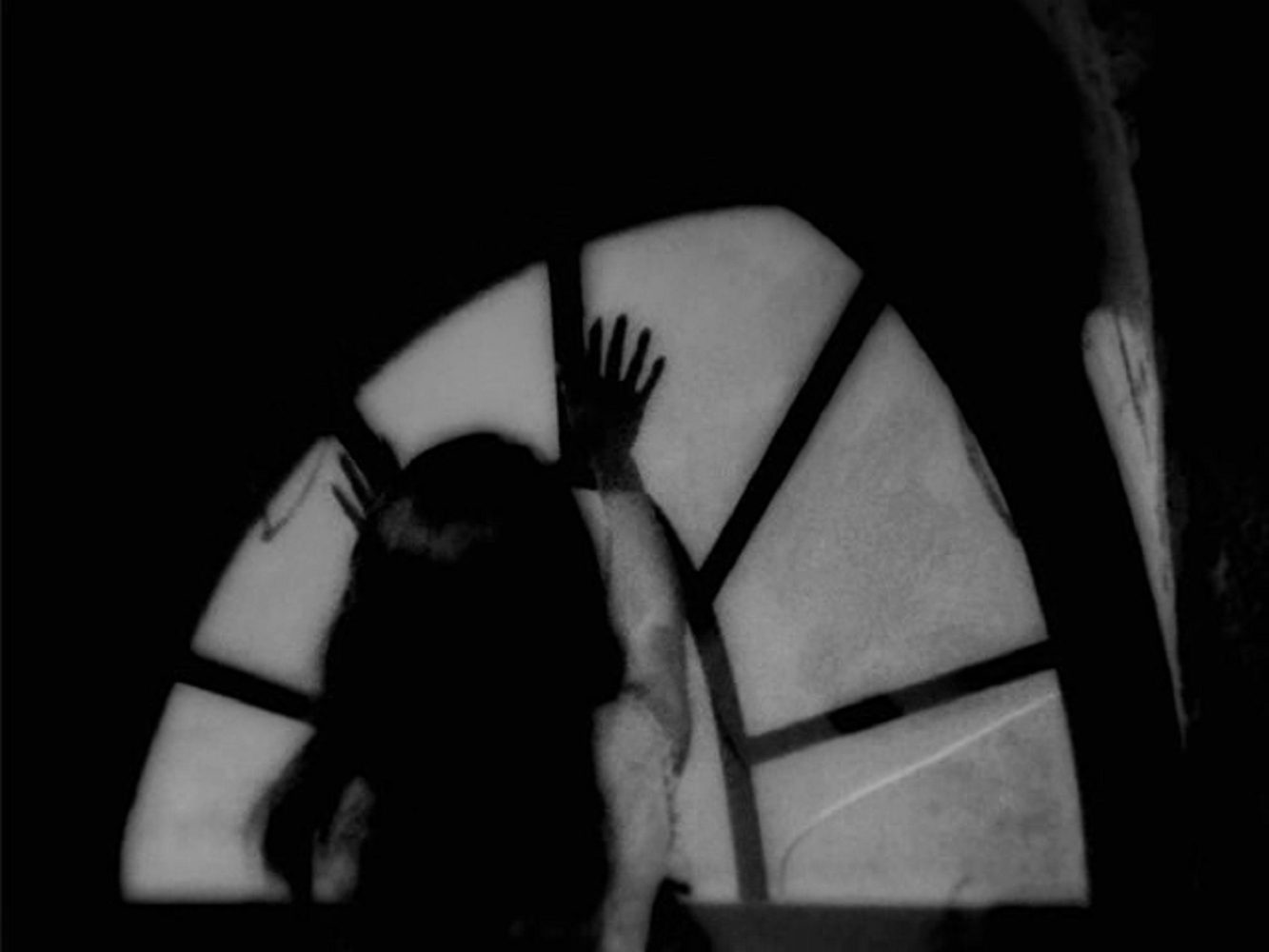
Vampir-Cuadecuc (1970) works from another flank—from within the genre film industry—and deploys another operation: the cinematographic deconstruction of cinema’s illusion. Shot parasitically on the set of Jess Franco’s El Conde Drácula and starring Christopher Lee, Portabella lays bare “the power of suggestion of the cinematic spectacle”12 through the very form of cinema. His purpose is “an effort of reflection on cinematographic language,” “a discourse on a discourse”13 that unmasks a kind of cinema he considers “artistically and humanly outdated and castrating” because it serves no purposes other than “profit and dispersion.”14 A vampirising that unveils the deceiving gears of cinema: the pasteboard of world-building, the technical labour hidden behind the screen’s opacity, the artificial blood turned into raw material for thought. Yet this dismantling does not arise from a comfortable position; it arises from a marginalisation assumed as a critical stance: the awareness of refusing to integrate into a cinematic apparatus traversed by the conditions of any dictatorship. Here, a key aspect of Portabella’s cinema is condensed: it is not made with its back to its context, nor is it limited to denouncing it; rather, it is implicated in its tensions, absorbs them, and returns them transformed into form.
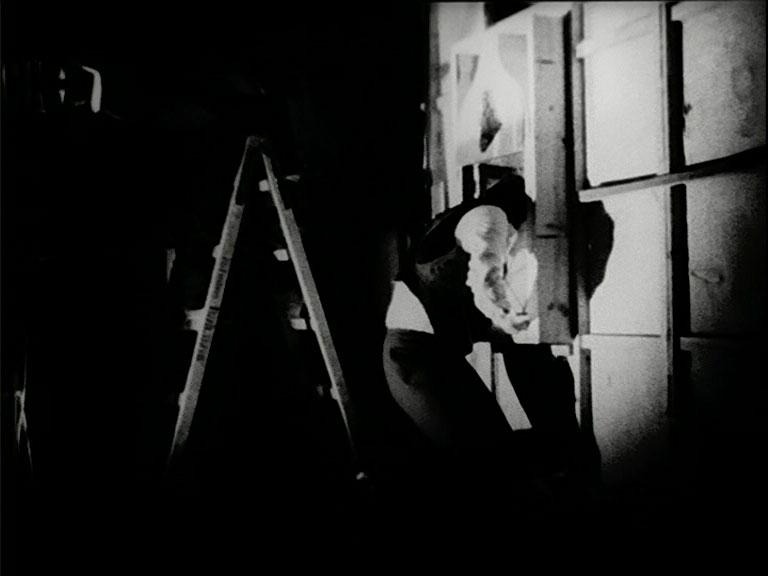
From another critical horizon, Portabella resonates with Laura Mulvey’s demand to attack the pleasure-economy of dominant cinema: not in order to found a new satisfaction, but to make way for “a total negation of the ease and plenitude of the narrative fiction film.”15 Vampir-Cuadecuc is a material operation on the very substance of cinema: it pushes the image to the limit through the use of sound negative—yielding a dichotomous texture, a polarity in which black and white become extremes in conflict—intensified by a soundtrack in which Carles Santos dethrones the illustrative accompaniment and leaves in its place a sound as an autonomous act. Portabella’s vampiric suction thus provokes estrangement through fascination: the experience of witnessing the very limit of cinematic materiality. A gesture that can be read in the light of Shklovsky’s defamiliarising function of art,16 insofar as it restores to us the sensation of things as they are perceived and not as they are known. A critical parasitism that defamiliarises the illusionism of all fiction and, with it, the self-evidence of any dictatorship as artefact, as assemblage of signs, as a rationalised production of fear, fantasy, and obedience.
El sopar and Mudanza: Making the Invisibilised Appear
If Vampir-Cuadecuc deactivates the dream from within, El sopar (The Dinner, 1974–2018) leaves it behind to build a shared space. With a minimal crew and clandestinely, Portabella gathers five former political prisoners around a table on the night when the shoot coincides with the garrotte execution of Salvador Puig Antich—something of which the five are fully aware. There is no script and no dramatisation: there is a conversation about prison, the hunger strike, and freedom. “The proposal of this film is an attempt to approach the specific problematics of the political prisoner”; one in which “all the participants intervened both in the theme and in the strategy itself.”17
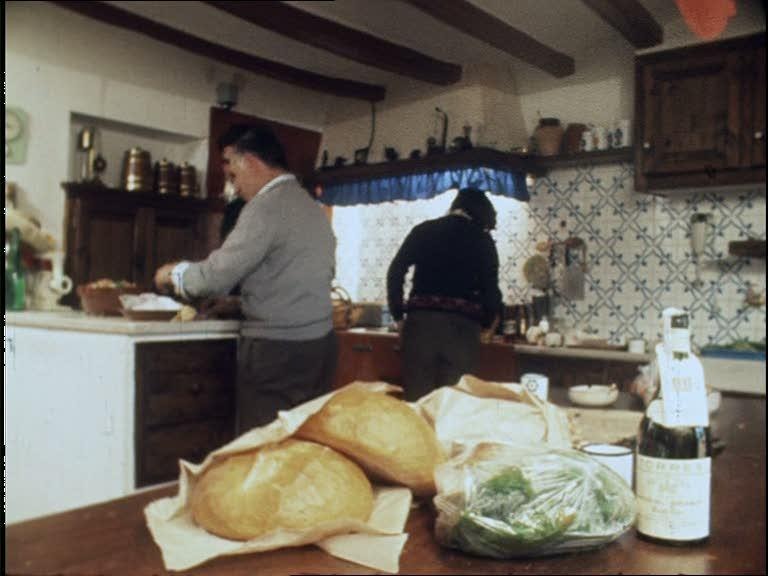
El sopar is not a documentary about political prisoners: it is a film made under the pressure of a brutal repression that is taking place. From this comes its unique moral tension, and from this, its decisive formal choice: sobriety. Portabella neither theatricalises suffering nor turns the participants into heroes; he imposes no epic of the victim. He films the dinner, the voices, the silences, the persistence of bodies that have suffered violence for ideological reasons. Its strength comes from that concentration: a stripped-down form that trusts in the word itself becomes an act of liberation. A form that does not represent an assembly but constructs one and, in constructing it, makes it perceivable across the time of every future gaze. There emerges, then, something akin to what Hannah Arendt understood as political freedom: a freedom that is not exhausted in liberation from oppression but is realised in participation in public affairs.18 There is also a resonance with the performative assembly thought by Judith Butler: a gathering of bodies that puts into question the distribution of the political and call for more liveable conditions of life.19 But the gathering of El sopar does not take place in a public space, for filming there would have been forbidden by the dictatorship as a political act. It takes place in the precarious space of a clandestine dinner, and precisely for that reason cinema acquires here a decisive function: it opens a place where collective speech can again be uttered, and where future lives may recognise in it the condition of their own voice.
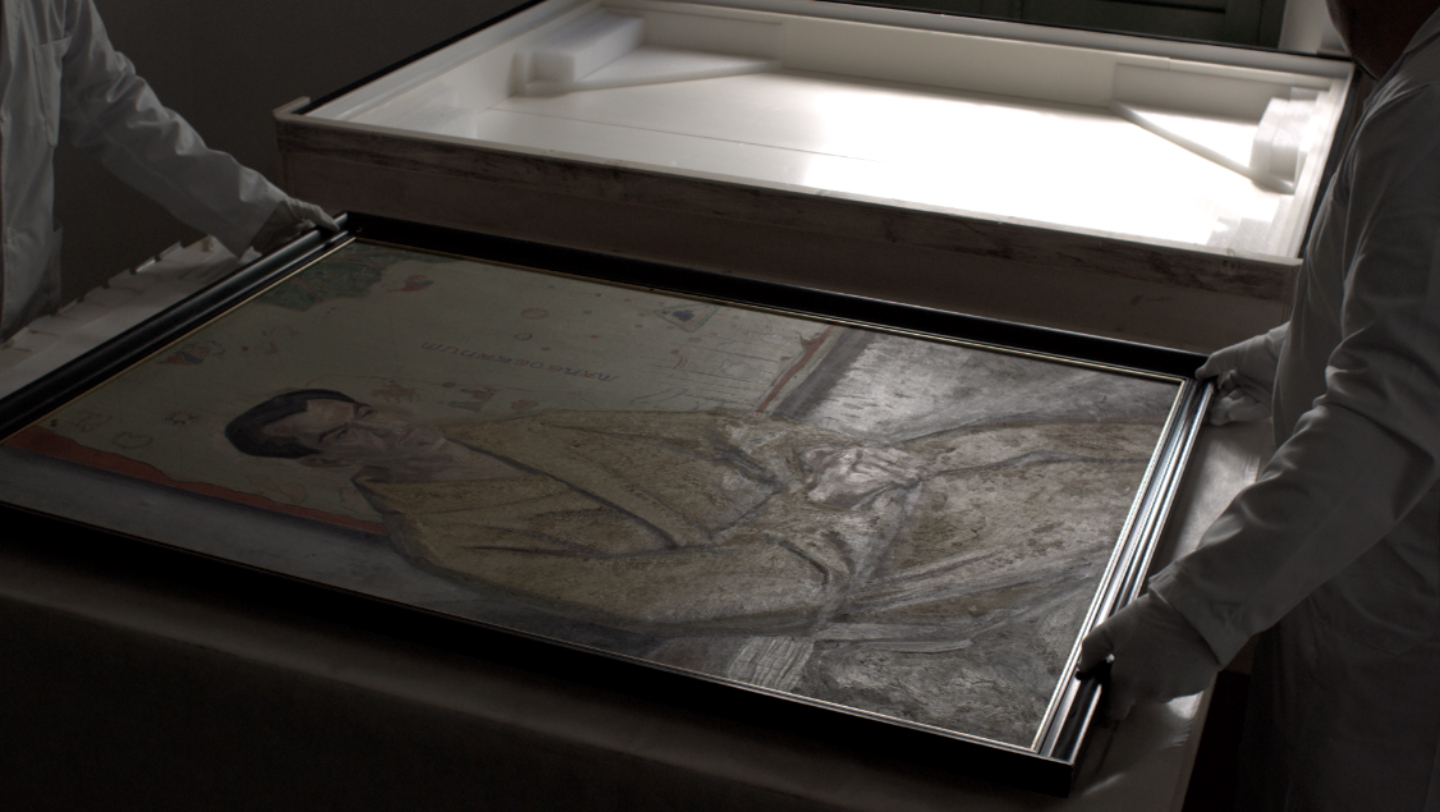
Mudanza (Removal, 2008), by contrast, operates without dialogue. Commissioned by Hans Ulrich Obrist for a series of actions at the house-museum of Federico García Lorca—the poet executed by Franco’s faction—Portabella proposes emptying the house “so that the visitor can wander unobstructed through spaces charged with meanings and resonances,” and “enhance and bring closer the significant absence, both emotional and historical, of the poet.”20 Lorca is not represented: he appears as a cleft, as a historical force that summons us. “In cinema, significant absences always acquire a strong presence from the off-screen. The emptiness of the house is occupied by the poet without fetishistic interferences.”21 Here the thought of Georges Didi-Huberman illuminates the operation: “there is no image without imagination,” and that is why some images, as visual traces of time, can “touch the real,” can make the real burn.22 The empty house is not absence: it is the condition for memory to come forth without being administered. To empty, here too, is a precise political form: it allows the real of buried violence to be felt again without becoming domesticated or neutralised by amnesia or by mere representation.
Form, Freedom, Gaze: An Ethics of the Present
What runs across Portabella’s work, from Carlos Saura’s Los golfos to his last film as a director, Informe general II (General Report II, 2015), is neither an ideology nor a style: it is the conviction that freedom is neither an attribute nor a decree, but the manner in which a gaze is exercised. The politics of cinema is decided not in the subject but in language, because language organises the gaze and the gaze organises the world: “without the adequacy of a language that deconstructs the canonical norm with a new narrative logic, no matter how good the intentions, a split takes place between the meaning of the content and the meaning of the form.”23 Hence his radical trust in the spectator. Against the voyeuristic gaze captured by the media and the paternalistic pedagogy of commercial cinema, Portabella builds a form that treats the spectator as a political subject—someone capable of looking, comparing, doubting, and deciding: it does not explain the world to them; it gives them back the codes. A critical resource akin to what bell hooks—from a situated practice of Black resistance against images produced by white and patriarchal structures—called an oppositional gaze: the freedom that begins where the gaze ceases to obey the regime that sought to contain it. In our present, where the capture of attention no longer operates only through censorship or prohibition but through saturation, engagement, and the compulsion to self-exposure, this faculty of looking against the dispositif becomes a political demand.
That is the wager of his cinema: no one stands outside the distribution of the sensible, and therefore no act of looking is indifferent. Where form is the frontier between freedom and submission, Portabella remains our contemporary. His cinema does not tell us how the world is: it returns to us the possibility—and the obligation—to look at it. And that restitution, in the present we inhabit, is the condition for any other political act still to be thought, and activated.
BIBLIOGRAPHY
Altaió, V. (2011). En la creativitat, la manipulació s’ha de reivindicar [Interview with Pere Portabella]. In Un sereno en el cementiri de l’art. Edicions Poncianes.
Arendt, H. (1990). On Revolution. Penguin Books.
Amela, V.-M. (2005, 20 September). Soy radical, pero no sectario [Interview with Pere Portabella]. La Vanguardia.
Butler, J. (2015). Notes Toward a Performative Theory of Assembly. Harvard University Press.
Didi-Huberman, G. (2018). Cuando las imágenes tocan lo real. Círculo de Bellas Artes.
Diestro-Dópido, M. (2011, July). Pere Portabella: From Buñuel to Lorca [Interview with Pere Portabella]. Sight & Sound. British Film Institute. https://www.bfi.org.uk/sight-and-sound/interviews/pere-portabella-looks-back
Foucault, M. (2014). What is Critique? And The Culture of the Self. The University of Chicago press
hooks, b. (1992). Black Looks: Race and Representation. South End Press.
Leal, C. (2021, 8 October). El caçador de vampirs [Interview with Pere Portabella]. Folha de São Paulo. https://www1.folha.uol.com.br/ilustrada/2021/10/quem-e-o-cineasta-espanhol-parceiro-de-miro-e-admirado-por-almodovar-e-glauber.shtml
Mulvey, L. (1975). “Visual Pleasure and Narrative Cinema”, Screen, 16(3), pp. 6–18.
Portabella, P., & Brossa, J. (1970). Vampir [Unpublished synopsis]. Arxiu Pere Portabella—Films 59.
Portabella, P. (2024). Impugnar las normas: Intervenciones sobre arte, cine y política (E. Riambau, Ed.). Galaxia Gutenberg.
Rancière, J. (2002). La división de lo sensible: Estética y política (A. Fernández Lera, Trans.). Consorcio Salamanca. (Original work published 2000.)
Shklovsky, V. (1965). Art as technique. In L. T. Lemon & M. J. Reis (Eds. & Trans.), Russian formalist criticism: Four essays (pp. 3–24). University of Nebraska Press.
Taylor, J. (2009). Mudanza [Interview with Pere Portabella]. International Film Festival Rotterdam.
- All quotations from Spanish and Catalan sources have been translated into English by the author. ↩
- Portabella (2024), Impugnar las normas, p. 458. ↩
- Ibid., p. 17. ↩
- Ibid., p. 22. ↩
- Rancière (2004), The Politics of Aesthetics, p. 7. ↩
- Portabella, in Leal (2021), “O caçador de vampiros.” ↩
- Portabella, in Amela (2005), “Soy radical, pero no sectario.” ↩
- Portabella, in Altaió (2011), “En la creativitat, la manipulació s’ ha de reivindicar.” ↩
- Portabella (2024), op. cit., p. 458. ↩
- Foucault (2024), What Is Critique? p. 26. ↩
- Portabella, in Diestro-Dópido (2011), “Pere Portabella from Buñuel to Lorca.” ↩
- Portabella & Brossa (1970), Vampir, synopsis. ↩
- Portabella (2024), op. cit., p. 156. ↩
- Portabella & Brossa (1970), op. cit. ↩
- Mulvey (1975), Visual Pleasure and Narrative Cinema, p. 8. ↩
- Shklovsky (1965), The Art as Technique, p. 12. ↩
- Portabella (2024), op. cit., p. 177. ↩
- Arendt (1990), On Revolution, p. 32. ↩
- Butler, Notes Toward a Performative Theory of Assembly, p. 21. ↩
- Portabella (2024), op. cit., p. 477. ↩
- Portabella, in Taylor (2009), “Mudanza.” ↩
- Didi-Huberman, Cuando las imágenes tocan lo real, p. 35. (trans. by author). ↩
- Portabella (2024), op. cit., p. 25. ↩