영화를 만들기 위해 필요한 것은 총이 전부다All You Need to Make a Movie Is a Gun
감독 산티아고 세인Santiago SEIN | Argentina | 2026 | 146 min | Documentary | 시네필전주Cinephile JEONJU
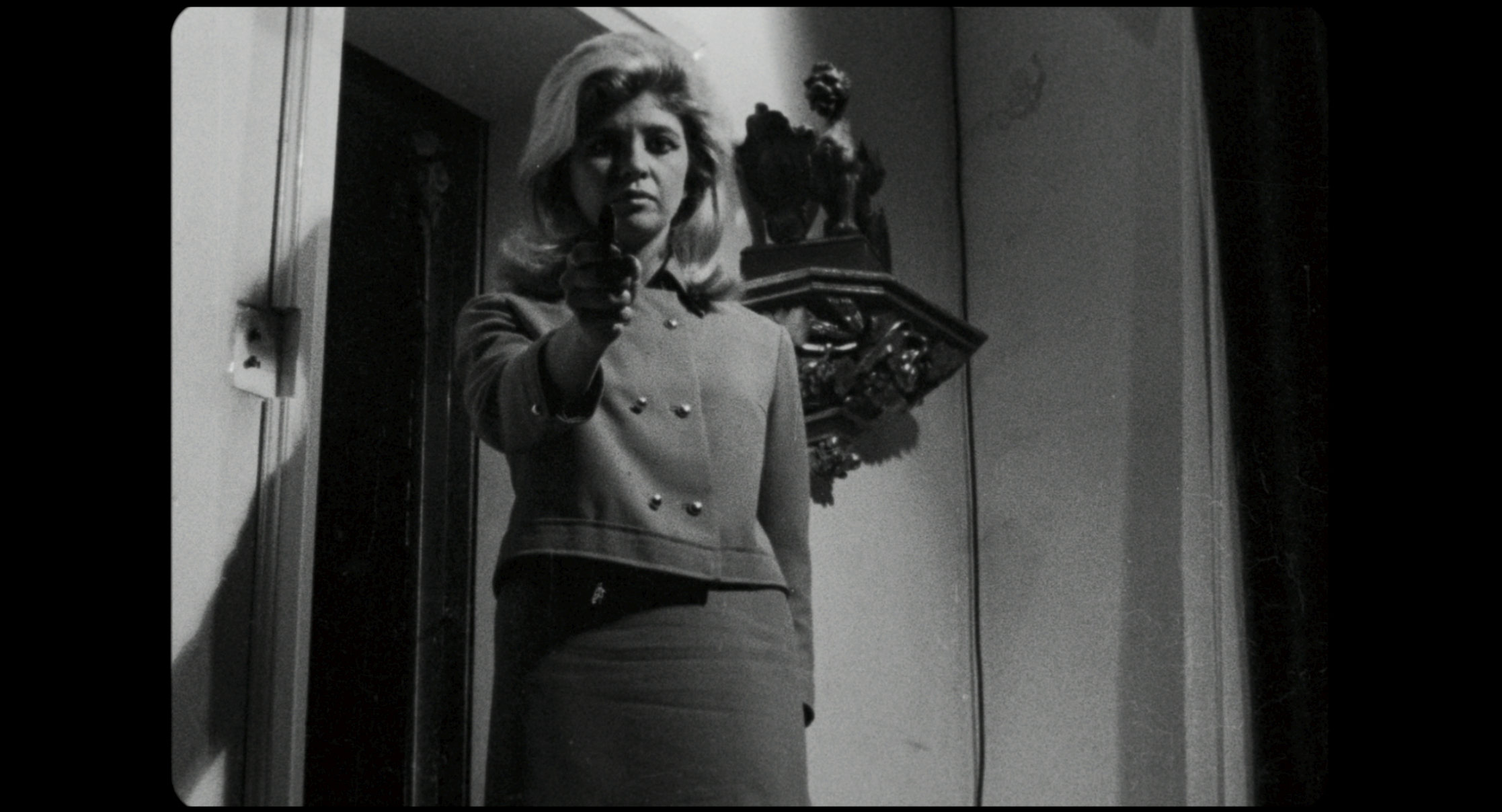
Films once believed lost have resurfaced, their restoration began, and a documentary also started to take shape. This situation—nothing short of miraculous—summons sixty years of silence, resistance, life and death, faces and names, while reviving history, politics, and art itself. The decayed film strips bring back ghostly traces lingering at the edges of the frame, images that overlap, tremble, and reveal themselves, restoring cinema, reality, everyday life, archives, and faces alike. With a sense of mission and dedication, Santiago Sein restores archival materials, crafting a documentary driven by both a passion for cinema and a responsibility toward history. At the same time, he mourns and remembers those pushed toward torture, imprisonment, exile, and death by state violence. What a gun can make is not only a film, but also a beautiful poem, a diary, and a requiem.
After discovering the film cans and boxes stored at the cine club of the National University of Córdoba, you completed the film while taking on two roles: an archivist and a documentary filmmaker. How did these two roles shape what you did in making the film?
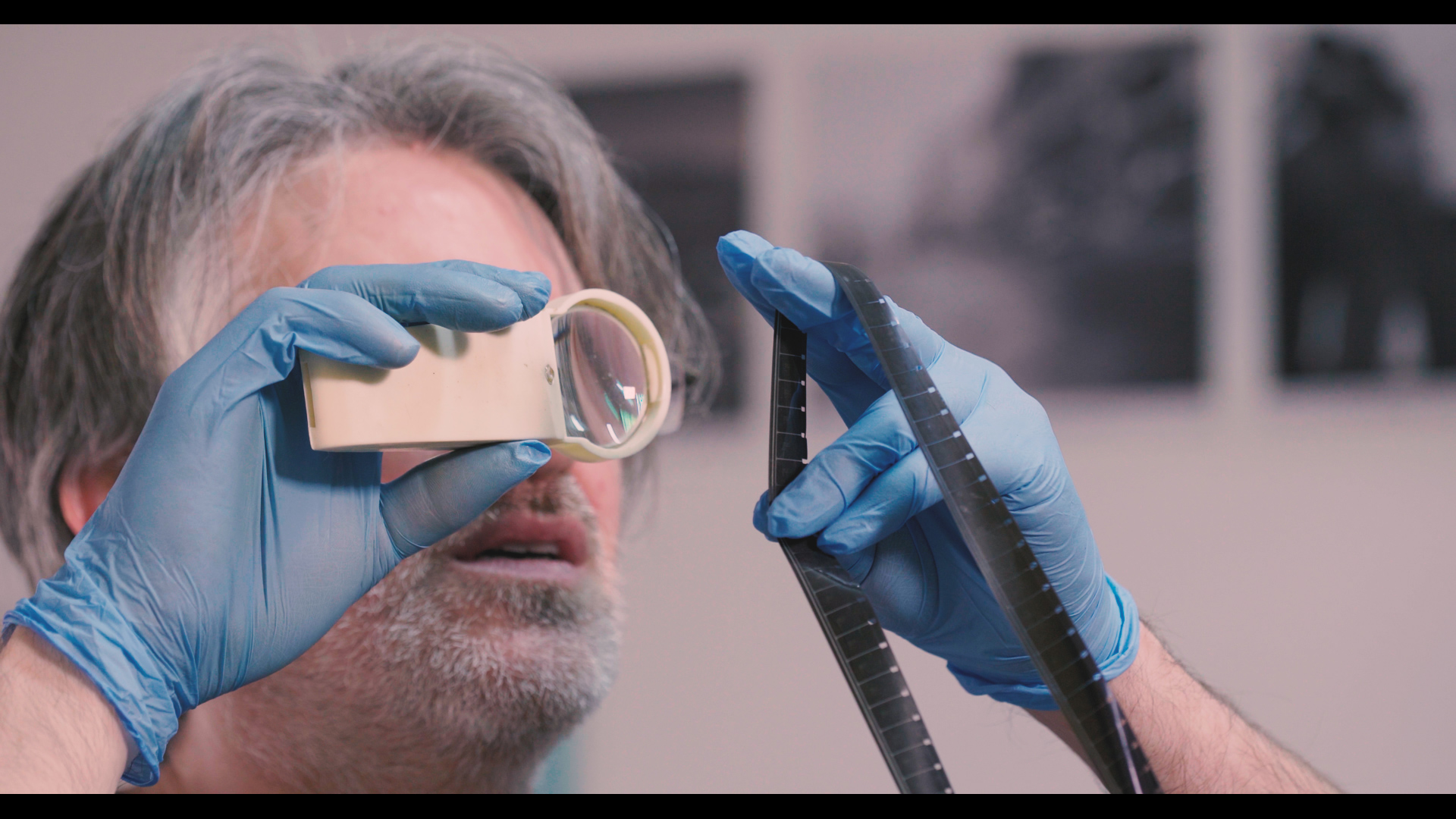
First came my role as archivist. My initial impulse was to rescue the films and try to understand what we were recovering, who their creators were, and the context in which they were made. But at a certain point in that process, when I saw the fragments of political cinema and learned about their filmmakers, I felt compelled to make a film to tell a story I was previously unaware of.
As an archivist, I tried to ensure that the aspect of discovery and preservation of the materials was present. In Argentina, this is an important issue, since there are almost no policies for the preservation of audiovisual heritage, and we don’t have a national film archive dedicated to it.
My role as a filmmaker, living in a provincial region, allowed me to connect with that generation and also to understand the difficulties they faced. Their love for cinema is evident in their attempts to make films, even under the most unfavorable political and material conditions.
The film shows how you face the fate of film cans that survived censorship and destruction. It is also a film of resurrection, bringing back to life filmmakers of that time who endured repression, imprisonment, exile, and death. Can you share your experience after confronting these deaths?
The dictatorship was very effective at erasing a period of local culture, including films and their filmmakers, from history. What makes this event particularly painful is that many victims of state terrorism are still missing. The images of those moving bodies that appear in the film serve as a reminder that this wound remains open. Our aim has always been to reclaim the cinema of that generation of students and teachers by recovering their films and their work, creating a piece from the recovered fragments.
You examined and restored a pile of films—many without proper titles or director credits, and where fiction and documentary materials are mixed. The corroded surfaces of the film, and frames that sometimes look double-exposed, create images that feel both surreal and poetic. As you worked with these films by hand, was there a specific moment that helped you decide how to make this film?
We found a lot of material that was in poor condition. The passage of time and the environmental conditions to which it had been exposed had left their mark on the film. We worked with that at certain points in the film, especially in the final chapter, where the violence and chases create an atmosphere of terror for the protagonists and the entire town. We felt that films with double exposures, also affected by mold, stains, and even the loss of parts of the image, could have an artistic use, linked to the perception of a certain estrangement. But there is also something ghostly in those frames and in the still photograph negatives we recovered. Bodies disappear behind stains; we barely sense their existence in the traces of a clapperboard, the edges of a face, a shadow, the outline of eyes.
Beyond working with the films themselves, you used tools and machines that have largely disappeared since the 1990s, such as the Moviola, Steenbeck, and Bolex camera. You also adopted the way filmmakers worked in the 1960s–70s. Why did you choose this approach, and what were you hoping to discover?
While recovering the films and trying to understand the stories of their creators, we discovered that a propaganda film had been made with the school’s old equipment during the dictatorship. And that its director had been the same person who had been left in charge of the Film Archive and the School’s equipment after its closure. That equipment had been recovered under democracy, but it was lying unused, stored in a warehouse and a classroom at the university. We thought about restoring it so that it could be used again by students. I was interested in trying to revive the film production process.
But above all, we thought that using that equipment to film a march for remembrance was a way of confronting what had happened. The same equipment that had been used to make socially and politically engaged films, and then used by the military to make propaganda for the dictatorship, was now available again to make films in the spirit of those early filmmakers.
The film is structured in three parts. Chapter 2 is especially striking: using a fictional narrator, it reconstructs the films and moves between fiction, documentary, and archival material to create a “new cinema,” linking film and revolution, Argentine history and cinema, and the contexts of the West and Latin America. In this chapter, after discovering films that were believed to be lost, you gathered unfinished footage and shaped it into an essay film. When did you start working on this approach? What were your main considerations in developing Chapter 2?
Chapter 2 was a narrative decision, born from two situations. The first was the frustration of not being able to recover most of the sound (open magnetic tapes fared the worst due to the passage of time and poor storage conditions). Much of the material pertaining to political cinema is soundless. Secondly, I was intrigued by a person who appeared every now and then in some part of the frame, usually in the margins, recording sound. I was interested in the challenge of constructing a narrative, a kind of sound diary, imagining what that person might have told us about what they experienced during those years. At some point in the research, I felt I had enough information about the creators of those images to venture into constructing a sound diary.
Watching the various films made by students at the National University of Córdoba, I felt they were valuable records of the interests and creative work of Argentine film students of that time. Scenes of university life, film shoots, protests, police repression, and political slogans come together to form a kind of “revolutionary cinema,” or cinema as political expression. I was especially struck by the footage showing the moments around filmmaking itself, such as young people’s daily lives and discussions. Toward the end, the film seems to arrive at its most important act of mourning and declaration. The images of state violence, along with the names and dates of the disappeared, are deeply painful—especially considering Argentina’s situation today. It seemed to me that this film was made to mourn them, and to complete a film that exists only in imagination. I would like to hear your thoughts on this.
The film was made under a very particular political climate, with a far-right government questioning certain issues related to human rights violations during the dictatorship—issues we thought were settled. In Argentina, the perpetrators of these crimes against humanity were tried. But they never repented nor provided any information about the whereabouts of their victims’ bodies. That’s why it’s a subject that constantly resurfaces.
We recovered some films, the projector’s light passed through them, and those images came back to us. In March 2026, the Argentine Forensic Anthropology Team discovered, near the “La Perla” concentration camp in Córdoba, the skeletal remains of disappeared persons in a mass grave that had been disturbed to destroy evidence. We can hardly close this wound until we know what the state did with the victims’ bodies.
The film shows figures like Gerard, Pierre, and Rudy, who believed that all you need to make a film is a gun, but also someone like Federico Alegre, who acted differently from that spirit. However, you do not present a clear judgment about this figure. Rather than explaining the relationship between film and politics, or stating what kind of cinema we need today, the film seems to look at that time and its people from different angles, leaving space for the audience to think. I would like to hear your thoughts on this.
In the third chapter, we used testimonies and documents because it’s a complex, under-researched story about which we had very little information before making the film. At the same time, Federico Alegre’s betrayal of colleagues and his complicity with the dictatorship is a serious accusation. Perhaps it’s not so clear abroad, but Federico Alegre’s association with General Luciano B. Menéndez, who held the power of life and death in Córdoba during those years, is compelling evidence provided by documents found in the university archives (which no one had looked for until now). We simply tell the story through testimonies, documents, and the equipment used. Our idea was to carry out an act of poetic justice for those whose desire to make films was thwarted by imprisonment, exile, or death. We accomplished this through cinema, using its tools. We do not intend to close any topic, but we do believe that the work has a stance towards the events and expresses it through the forms and language of cinema, trying to live up to the recovered images.