필름 핀Filme Pin
감독 마리아 로하스 아리아스Maria ROJAS ARIAS, 안드레스 후라도Andrés JURADO | Colombia, Portugal | 2026 | 8 min | Experimental | 영화보다 낯선Expanded Cinema
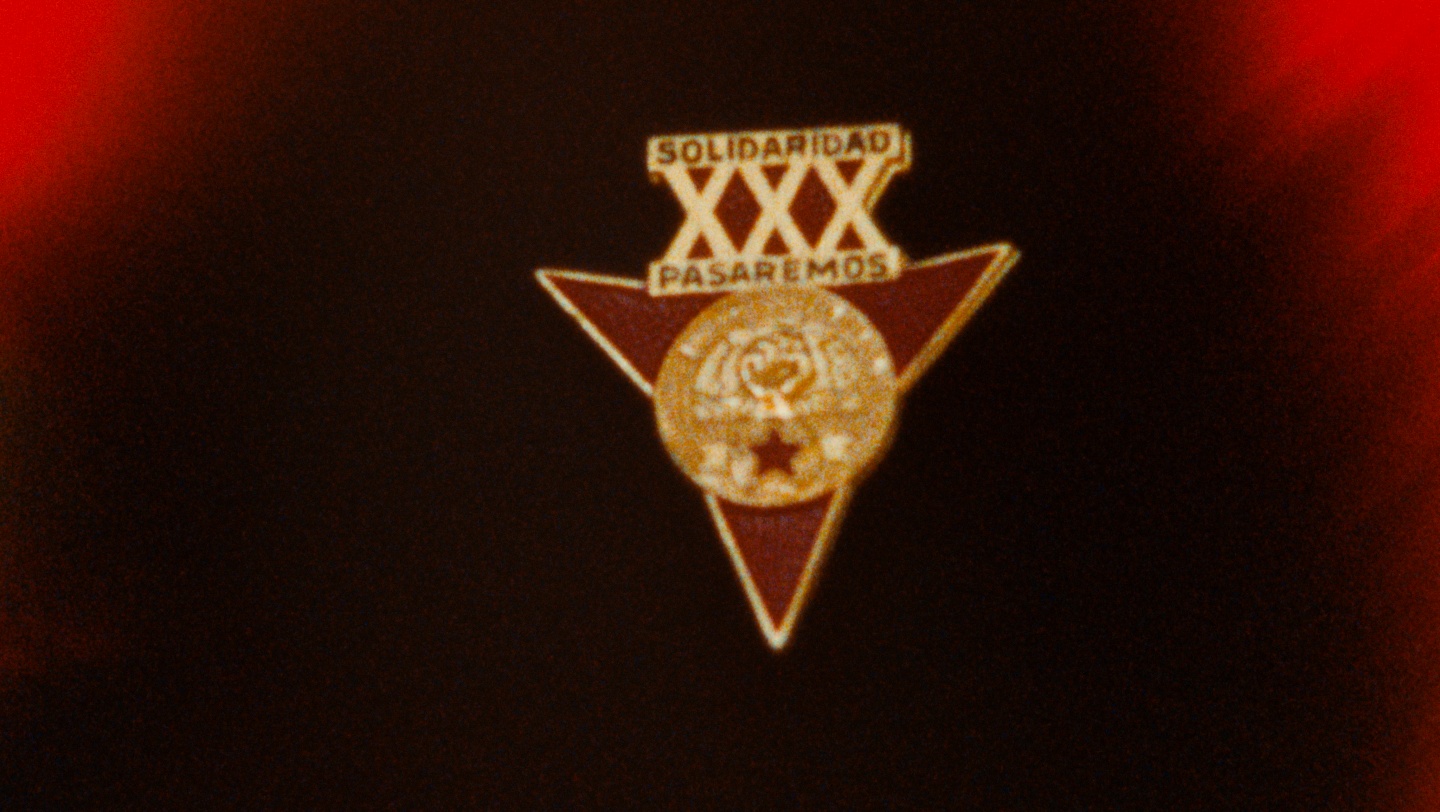
Filme Pin is a work by visual artists about subjects and objects awaiting discovery. Though only eight minutes long, the film unfolds into an essay on memory and the records of a long history. It began with a simple idea: documenting a collection of badges found in a neighbor’s attic. As archival objects, these badges bear traces of exile and political activism.
Co-directors Maria Rojas Arias and Andrés Jurado explore the badges’ origins, forms, textures, and the hidden stories waiting to be uncovered. Shot on Super 8mm, the minimalist yet mesmerizing images transform these ordinary metallic objects into materials for vast narratives. By examining both the front and back surfaces through tactile lighting, the film turns small souvenirs into cinematic, sculptural objects that embody human solidarity.
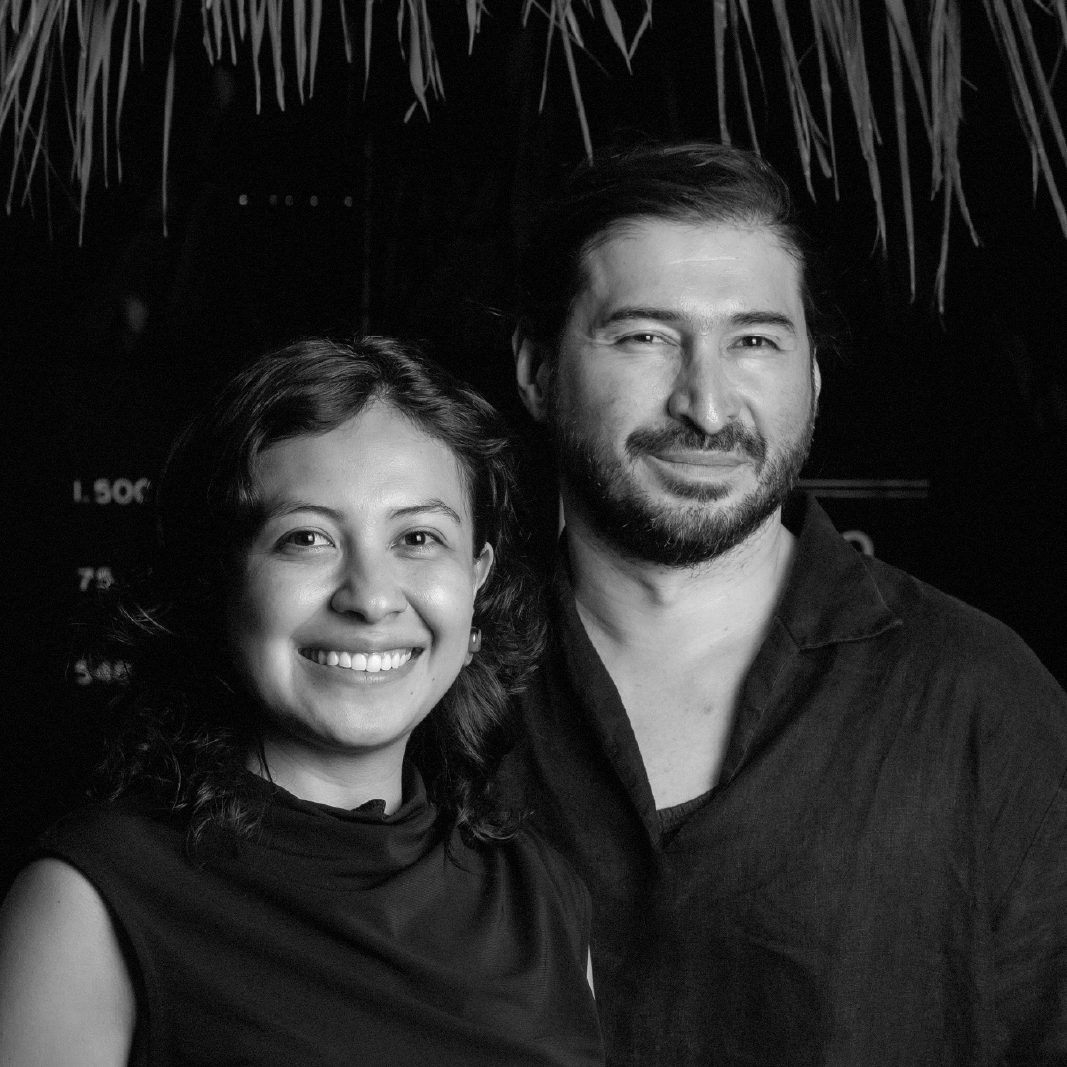
Colombian visual artists and filmmakers Maria Rojas Arias and Andrés Jurado are the founders of La Vulcanizadora, a laboratory for visual art, film, and theater projects. I spoke with the two directors—whose work explores memory, resistance, and expanded forms of cinema through film, art, and archives—about badges, history, cinema, Palestine, and politics. What followed was an interview composed of a short film, short questions, and expansive answers.
The idea behind Filme Pin, which unfolds through discovering meaning in a badge collection found in the attic of your grandfather offers a fresh perspective on the context of a personal archive. Could you tell us about the starting point of this film?
The grandfather in the film is the character’s, not ours, though perhaps that distinction matters less than it seems. In Filme Pin, both the grandfather and granddaughter gradually become something closer to spectral figures, almost archetypal, which may be exactly why the confusion arises so naturally and so often. And it is operative in a useful way: personal archives are also repositories of collective struggle, and pins are, by nature, popular objects that belong to a shared history of peoples. This is precisely what makes memorial objects fluid when they enter a personal archive: they cease to be property and become evidence of participation in something common.
The project began during the years we were living in exile in Portugal. We had become acquainted with some friends in our neighbourhood, and it was during one of those visits amid the pandemic that a box of pins surfaced in conversation. We asked the owner, a British woman in her forties, if we could film them while she spoke about her memories of each one. We never planned to film her directly. Everything was focused on the pins, and we listened to her reactions as we discovered them together.
A few weeks later we returned with a sound recorder and a camera. It was not an interview. We brought a more theatrical, cinematic attitude, looking to draw out the dramatic properties of the objects. We set up a macro lens and built a small, intimate set to film the pins as literal objects, as if they were on the verge of becoming subjects and sculptures, memories and desires, film and rumour. Filming itself was the starting point, already with the knowledge that we would eventually scale these images to the cinema screen.
Making pins is also part of how La Vulcanizadora thinks about communicating a film. We did it before with Yarokamena (2022), and we are drawn to this kind of popular, emblematic object as a way of extending a film beyond the screen and into the hands of people. We understand the collection in Filme Pin in that same spirit: something that breaks through the personal into the collective, an archive and at the same time something never intended to carry the weight of one, much like the pins themselves, which belong to many other stories: to workers, to plebeians, and in that sense, to us, the people, including filmmakers. And this is something that keeps confirming itself after screenings: many people come to us and say they have a similar collection at home, one that belonged to someone in their family. That feels like a certain internationalism of these solidarities, still alive in a box somewhere in an attic.
Could you tell us more about the narration, “E acho curioso porque não sei de onde vieram?” Why does an archive of unknown origin interest you?
This is a key question for us. We are certain that filming helped to summon memories that were not prefabricated, and also helped to fabulate the desires of the voice that speaks. The voice hesitates between remembering and fabulating, and that hesitation leads us toward a kind of contaminated memory: one inhabited by the projection of what we want to be living or recalling. Memories are not invulnerable. The voice clearly does not know everything about the pins; it is discovering them, and that experience of discovery is precisely what we wanted to transmit.
There is another moment when the voice mentions that some of these objects had been filmed before. We have no evidence of that, but we hear in it a desire, a becoming aware of the simplicity gathered in the objects, something that emerges through the act of staging them for filming. There is, in that moment, her own desire to become a filmmaker as well. The unknown arrives and it can be resolved through this disposition of curiosity: an openness to research, to share knowledge, to create spaces and times to remember and to celebrate film.
The film itself becomes a reminder. It reminds and conjures not only memories as something pure. On the contrary, we show that memories are filled with personal desires and projections. That is also the political operation of Filme Pin: to acknowledge that the pins carry collective stories, that histories of exile and struggle are not to be owned in particular or capitalistic ways. The stories of Amílcar, of Mandela, the image of Yusuf Salman Yusuf, of Frelimo, or of student movements in Colombia are at once common and personal memories, shared across these spheres of solidarity. In Filme Pin, there is no individual story that stands above the others. The film conjures memories that arrive magnetised and galvanised by the plebeian object and the popular image.
What began as a truthful curiosity about not knowing where the pins came from became an operation of knowing where to place them. We decided to place them in film. We are honoured to screen Filme Pin at Jeonju, one of the festivals closest to La Vulcanizadora’s heart.
Did you use all the badges you found in the attic? If not, how did you choose which ones to include? And how did you decide the order in which the badges appear in the film?
We filmed all the pins that were in the box during our second encounter with it, though we discarded a few in the editing process, depending on the qualities of the shoot after developing. Keeping focus was not easy given how small the objects are, and to scale them up we used macro lenses compatible with the Super 8 camera. We decided to include most of them according to how the voice narration was unfolding and what we wanted the film to convey, and that determined a certain order in the conversation.
We waited for the film to develop over some years, and when we returned to it we discovered that the pins were mixed between the oldest and the newer ones. It was a mixed archive, and that mixture was probably part of the confusion of memories. We kept pins like the one from Canada, whose origin we did not know. We did research for our own sake, though not for the film itself, as Filme Pin does not intend to be a merely informative work.
The order was determined by moments we wanted to sync and moments we wanted the spectator to memorise. We worked through non-synchronicity. In one of the first cuts we synchronised image and sound, but it felt unrealistic. What we wanted instead was to activate and dynamise memories, to make people play and participate. Whether the pin you saw a minute before is the one the voice is now recalling, or whether the voice was anticipating a pin about to appear, this is more or less how we staged the spectrum: the manifest and the latent spectre of another struggle to come.
The filming concept is quite simple: you shot the badges on Super 8mm film against a black background. What are the advantages of using a black background? Why did you choose this kind of mise-en-scène?
We wanted to work with the natural and generous sunlight of Lisbon. When we were about to shoot we asked where the sunniest spot in the location was and found it by a window. The light in Lisbon is strong enough to make the metals shine, and we were looking for a dark background to give volume to the objects. One of the aspects we considered as artists was the sculptural character of the small object. We wanted to use scale as an operation to enhance the volumetric dimension and the material conditions of the badges, revealing traces of temporality: rust, texture, measure.
On screen they appear larger than they are. That is when the hand becomes truly important, mediating between the scaled object and the human reference. The manipulation of the pins carries its own truthful contradiction. We wanted to concentrate on the objects and their capacity to generate varied and contrasting relations with the spectator, to let the material speak before the meaning does.
You also filmed the hand placing and removing the badges in front of the camera. This might be a basic question, but why did you choose to show these movements instead of just the badges themselves?
We did it to insist on the humbleness of basic things and basic needs. Filming is, for us, one of those moments and rights we like to share, and we are in solidarity through the act of filming and doing what we do. Badges are not alone. They are accompanied by imaginations, desires, memories and fables. Filme Pin gives us the sensation of remembering ourselves, as if we are inhabiting that point of view, as if it were our own.
The hand is connected to this explanatory voice and lets us follow, listen and inquire. We remember that at one point she asked if we wanted her to remove her ring, and we liked the ring very much, so we said no, keep it: it has an eye and it is looking back. There were comments later about the nails too, but the objects remained the centre of gravity and we made that clear during the editing. We paid attention to all the paraphernalia, especially the small books, which are objects we have a particular affection for at La Vulcanizadora. The miniature edition of The Communist Manifesto was one of many objects present in that space that we wanted to begin with, to film, to scale, to summon, as an introduction to the badges.
We do not consider the collection an archive in itself. The archive begins and becomes possible through the filming process. It becomes an archive through film. One can understand then that the pins are part of a wider popular interaction, a filmic interaction that makes life more interesting than the films themselves, if one can ever say such a thing.
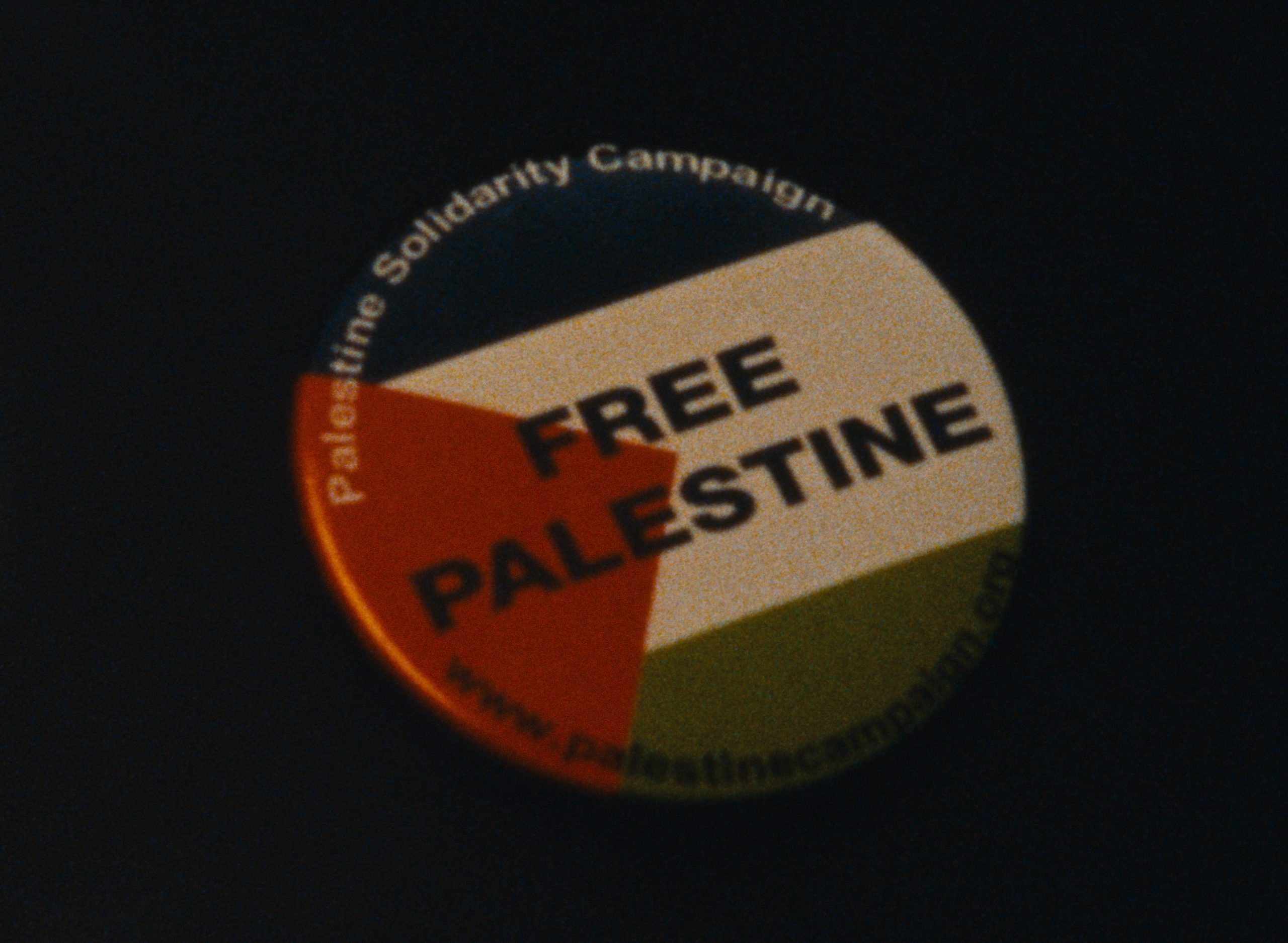
There is a pause in the middle of the film. After showing a badge that reads “FREE PALESTINE,” the screen goes black for a moment, and then in part 2, the backs of the badges are shown. Could you explain this shift—from front to back—and the transition after the message about Palestine?
We decided to stop at the Palestine badge during the montage. We were recreating a temporality and a cosmos from what we had filmed years before, and it was clear that we needed to pause there. From that moment we began showing the backs of the pins: the piercing metallic part, the infrastructure, the sculptural body, the weight, the metal that supports the images and summons the bodies, the chests, the place where you pin the pin. That part which is not seen in the front of the film speaks to the thousands of people being killed in a brutal genocide. We are also aware that stopping there could pierce and signal, signify and transmit this very specific moment when causes come together.
As the Palestinian writer Nasser Abourahme has said, Palestine is everywhere because it names a political subject of radical universal emancipation. As Colombians we feel and know this, considering that we have lived the consequences of Israeli military intervention and that Israeli forces trained the paramilitary groups of Colombia to kill, disappear and massacre communities in our country. These are not individual causes to codify or tokenise. Every one of us can recognise this shared ground of struggles.
We are like ghosts wearing the pins. You can see the backs as if they are being worn by spectres. You can see the needle and what it holds. They look like large metal sculptures, and you can read in them the rust and the traces of use.
You have explored themes like national narratives, politics, and colonialism using both official and unofficial records. What led you to this way of working? What sparked your interest in working with the relationship between history, memory, and archives?
It came from our drive to make films as artists, and from the acknowledgement that images and sounds are something you can find or that find you. We also believe, increasingly so, that we are ourselves part of an archive. Colombia was a colonised territory and we still carry many of the traumas of colonial rule, deepened by imperialism. That is one part of our history, and in the journey to understand our context and contribute to the many struggles we are part of or support, we have come to specialise in working with archives.
We are influenced by many writers, thinkers and filmmakers who understood that to work with images is also to work with power: with what gets preserved and what gets erased, with what is made visible and what is forced into silence or compelled to censor itself. Archives are never neutral. They are the result of decisions, erasures and desires, and that is precisely where film can intervene.
The beautiful thing about Filme Pin is that it was made with love, with criticism and with curiosity, as a call for small actions of recognition: the simple, the beauty of lightness, the weight of something that weighs almost nothing and yet holds everything. The Colombian writer Juan Cárdenas has written about the weightlessness of art, and that idea stayed with us, because these pins are exactly that: light enough to wear on a chest, heavy enough to carry a history.