Why Do People Go to Film Festivals?
I recently came across a post on social media from someone who had attended the JEONJU International Film Festival for nine consecutive years, accompanied by a photo of their tickets. Looking at the titles printed on them, most were films that had not been released domestically. If there is a role of international film festivals that remains unchanged despite the upheavals of history, it is precisely this: to introduce films that struggle to secure theatrical release in their respective countries. To allow films that cannot be seen elsewhere to make their presence felt—that is the mission. This may sound self-evident, but current tendencies suggest that festivals are in fact moving in the opposite direction.
Recent cases at the JEONJU International Film Festival show a different dynamic at work. Films that import distributors initially approached with hesitation—often because they were unusual or experimental—have received strong responses during the festival and subsequently been acquired for distribution. What is crucial here is that distributors did not preemptively acquire well-known titles expected to draw audiences and then showcase them at the festival. Rather, they were prompted to act by the audience’s response at the festival itself. An engaged audience responding to strong programming, and distribution decisions driven by that response, represent an ideal market function and a positive role that a film festival can generate. Yet despite such examples, why do festivals continue to program films that distributors have already selected? The answer lies in the desire to build a “safe” program.
For programmers, it is far easier and safer to select films from award winners, pre-acquired titles, or lists provided by distributors than to search for hidden gems for an audience driven by curiosity and a spirit of exploration. Audiences, moreover, tend to respond more enthusiastically to the former. When presented with the name of an unfamiliar director, they often show little interest and may even dismiss the program as lacking merit before any direct engagement with the work. Those who favor lesser-known filmmakers or experimental works are less visible, leading industry professionals to believe that they must screen films that elicit immediate audience reactions. In this sense, both programmers and audiences share responsibility for programs becoming increasingly filled with similar films—films that are expected to perform well in the market. Fortunately, over the past few years, JEONJU has offered an alternative example, demonstrating that the film ecosystem can, at times, still operate according to a more organic logic.
Can Film Festivals and Film Markets Coexist?
In recent years, the Korean film industry has focused intensely on revitalizing itself. As it passes through a period of change shaped by complex and interwoven factors—many of them difficult to fully grasp—various measures have been proposed, yet no clear solution has emerged. Government agencies often entice festivals with the promise of increased funding if they operate a “market” that supports the industry. The problem, however, is that markets inevitably revolve around profitability, and thus tend to be structured around films already selected by sales companies, resulting in exclusion. In this sense, markets centered on a limited number of titles and film festivals that pursue diversity are bound to come into conflict. Yet if we let go of our fixation on the word “market,” a clearer reality comes into view. Many mistakenly believe that low-budget films are merely a training ground before entering the industry, but in fact the markets in which independent/art films and commercial films operate are separate. The notion that no market exists beyond the large, corporate-driven commercial sector is itself unrealistic and reductive. Over eight years of attending international film festivals, I’ve learned that for independent/art films, festivals themselves serve as key distribution sites, each opening distinct trajectories shaped by its orientation and identity. In other words, distinct markets exist for different forms—short films, genre cinema, arthouse works, and so on. A truly healthy ecosystem would be one that accommodates films seen by a million viewers while also consistently presenting films seen by only a hundred. At a film festival—at least during the ten days of the JEONJU International Film Festival—these two worlds can coexist in balance. Ensuring the sustainability of such a landscape requires a strong sense of role and responsibility on the part of programmers.
Today, with the rise of global platforms and online business, the role of the film market has long since shifted away from import and export itself toward identifying trends, serving an educational function, and building human networks—ushering in what might be called the “conference” era. Even so, some remain unable to let go of “markets” due to longstanding assumptions, clinging to the illusion that if the industry thrives, everything related to film will naturally follow.
The film industry and film festivals can coexist, but they must be understood as distinct. Within the industry, films are produced through investment, and profit becomes the primary measure of evaluation. Film festivals, however, must operate differently. Most are funded by public resources and carry an obligation to fulfill social value as an alternative to the industry. What, then, should film festivals pursue in their public role? In industrial terms, if a quarter of the population watches a particular film, it is considered a success. While this may help sustain the industry, it also renders countless other films invisible. In the public sphere, hundreds of thousands of films must be made visible. In other words, while the industry may build a single narrative of success, film festivals must diffuse light more widely. The programmer’s role is to ensure that diverse films—revealing ways of living and systems of value beyond capital—reach and resonate with audiences.
There is also a point of caution when it comes to supporting art and independent cinema. Recent visits to international festivals suggest that even within what is broadly labeled “independent” or “art” cinema, certain tendencies have emerged. In North America, debut features often appear like composites of a handful of independent films that have succeeded at the Sundance Film Festival or the Academy Awards, proliferating almost as replicas. In Europe, common approaches include the use of non-professional actors, shooting in real locations, blending fiction and reality, and blurring genre distinctions. What pioneering figures such as Pedro Costa, Dardenne brothers, Lisandro Alonso, and Sean Baker developed over the past three decades has, by now, become something of a convention. Among those who position themselves as their successors, there are filmmakers who genuinely pursue formal innovation in their own ways, but there are just as many who seem to believe that adopting a few recognizable devices—derived from the success of well-known directors—is sufficient to constitute art. Instead of reflecting on the elements necessary to construct a world grounded in their own vision, some prioritize preselected themes, intentions, and formal components, resulting in a reversal of ends and means. At times, the subject matter and intention of a film are mistaken for its achievement; the real issue, however, lies in method. Since the invention of storytelling, genuine novelty has been exceedingly rare. We are now even in the age of artificial intelligence; what matters is not so much what one addresses or why, but above all “how” it is approached. The key is not the transmission of plausible ideas, but how a film makes us feel. In this sense, one of the essential qualities of a good programmer is the ability to discern genuine cinema amid a multitude of replicas.
The Programming Framework of the 27th JEONJU International Film Festival
In this context, this year’s programming at the JEONJU International Film Festival has focused on the question of “how”—on methodology. To break free from the cycle in which similar kinds of films are financed, produced, and distributed—whether in the mainstream or its margins—what is required is not adherence to precedent, but a shift in thinking that disrupts the field’s structure. In particular, we as programmers felt an urgent need for a spirit of rupture in the contemporary Korean film scene. Attentive viewers may already have sensed it, but throughout this year’s program one can find a strong current of formal and conceptual experimentation. Beyond the special screenings (“New York Underground” and “Ahn Sung-ki’s Memorable Films Yet Rarely Seen”), most of the films in the “Cinephile JEONJU” section embody a spirit of innovation. “Back to Hong Kong: Cinema + Avant-Garde” likewise presents works produced outside the film industry, films that imagine the subversion of systems, and works that pursue formal radicality. With the hope that the innovative spirit of the past might awaken latent energies within contemporary Korean cinema, the focus was not simply on restored masterpieces, but on films that once catalyzed transformation in their own time.
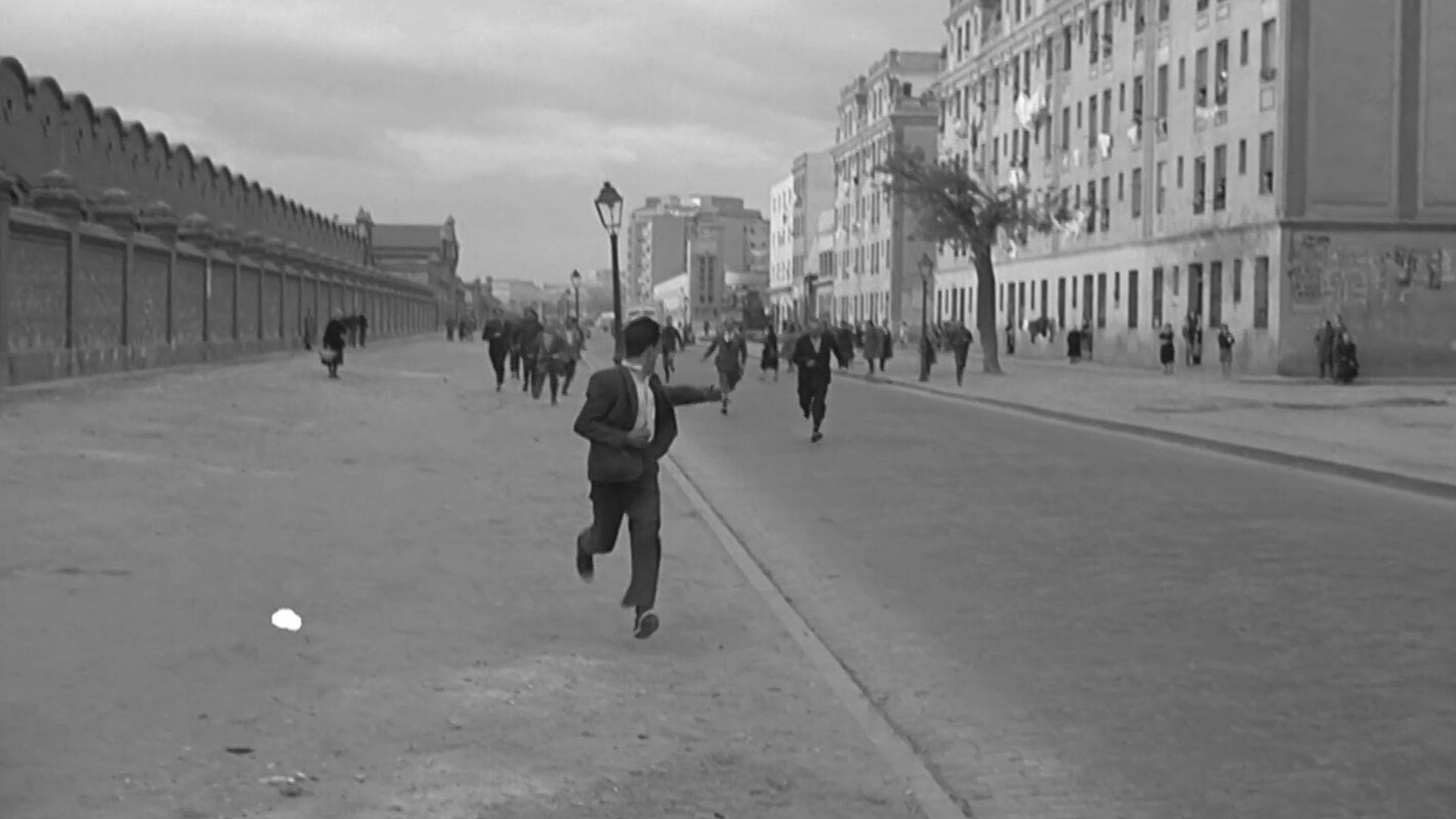
The newly introduced section “Possible Cinema” reflects a commitment to supporting alternative modes of production. First presented as an idea in last year’s special program, it was also developed into a book of the same title. Remarkably, the book sold out within six to seven months of publication, prompting further discussion and expanded curatorial initiatives among practitioners. While discussions of cinema often proceed as though “story” were everything, many have resonated with the view that the true core of cinema lies in the organization of audiovisual materials and the choice of production methods, which together shape a film’s underlying ethos. This section introduces distinctive works that, while confronting a system fixated on box office rankings, profit, and reputation—and one that rarely relinquishes those aims—pursue alternative paths through artistic creativity. The creators of “Possible Cinema” are those who, even in an age of uncertainty, connect the essence of life with the values of cinema and refuse to relinquish hope; in other words, they are the ones who make cinema possible. It is in this spirit that the festival presents special screenings of works by the Spanish filmmaker-producer Pere Portabella and the Hungarian director Béla Tarr—figures who exemplify the ethos the JEONJU International Film Festival seeks to uphold.
Ambition as a Programmer
While each programmer may have different goals, my own aim is to convey to audiences what culture can do and what cinema, as an art form, is capable of doing. It is to contribute to the realm of the human spirit in ways that basic needs or money cannot. I am equally driven by the desire to discover a wide range of works: from films that help us embrace our own imperfections and understand others, to those that reach the highest levels of artistic achievement.
I cannot forget the moment I first saw Babette’s Feast (1987). The film portrays an experience of cultural abundance beyond the bounds of rules, one that allows for imagining how the joy of the spirit might expand, even while accepting human limitations and impurities. Babette’s feast shows that while human beings may survive under minimal conditions, happiness requires a richness of culture (represented in the film through the sumptuousness of French cuisine).
In 24 Hour Party People, there is a scene depicting a 1976 live performance by the band Sex Pistols, attended by only a handful of people. Yet many of those in the audience would go on to form bands such as Joy Division, eventually reshaping the music scene. In art, true success may lie in creating works that carry both originality and a sense of permanence. As a programmer, my greatest ambition is to present works that endure beyond their time—films that inspire other creators, contribute to the expansion of art, and ultimately establish a singular, irreplaceable presence.
Lastly, I hope to present through the form of cinema the various “phenomena” (large and small) unfolding across the world. Today, we encounter news through the internet and fall into the illusion that we have already seen what is happening globally. In reality, life may exist somewhere in the gap between the online and the offline. As a programmer living in the present, my task is to take the time to document these “phenomena of now,” and to seek out films that offer a distinct perspective within them. Fortunately, such films have been invited to this year’s festival—not images stripped of context, but works that use the tools of the present to reflect on our lives and our society. Within the JEONJU International Film Festival, programmers create the conditions in which audiences can watch films, construct their own contexts, trace connections between works, and ultimately contemplate how our lives exist in the present.
Thankfully, audiences who come to the JEONJU International Film Festival respond to values beyond money or numbers, even selling out screenings of films with no dialogue or those running over eight hours. It is in reliance on these viewers, who seek a diversity of spirit that cannot be quantified, that this year’s programming has once again been shaped. JEONJU International Film Festival is a ten-day event that strives to illuminate a thousand lights; what follows belongs to others. Encouragingly, small cine-clubs and curated screening series have recently begun to emerge. I hope that such initiatives—reminding us that as many forms of cinema exist, so too do many ways of living—will continue to arise, more widely and more persistently.