올 오브 어 서든All of a Sudden
감독 하마구치 류스케Ryusuke Hamaguchi | France, Japan, Germany, Belgium | 2026 | 196 min | Fiction
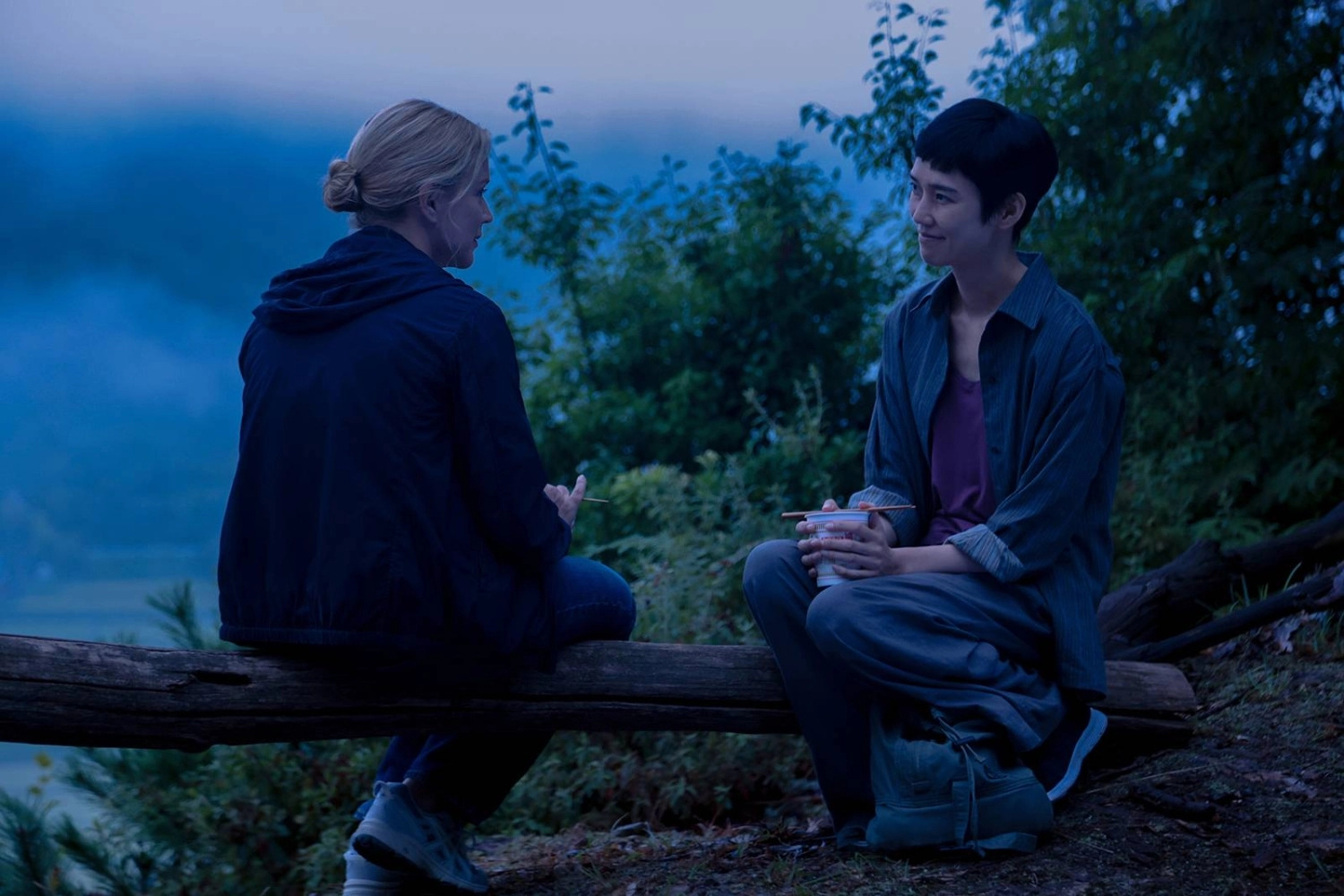
Suddenness, speed: these are not words one spontaneously uses to describe the cinema of Ryusuke Hamaguchi. With All of a Sudden, he even spent over three hours adapting a correspondence between the philosopher Makiko Miyano and the anthropologist Maho Isono, transformed by the screenplay into Marie-Lou (Virginie Efira), a French nursing home director, and Mari (Tao Okamoto), a Japanese stage director who has come to Paris to present her latest play while suffering from cancer that worsens during her stay. But the sudden nature of things, here associated with illness, actually runs through the filmmaker’s work in the form of events that open a real or metaphorical fissure in lives, whether it be the disappearance of loved ones or natural disasters (a tsunami addressed in his documentaries, an earthquake in Asako I & II, and the cerebral embolism that caused the death of a wife and the landslide that killed a mother in Drive My Car). His narratives can thus be seen as ways of accompanying intimate upheavals and attempts at reconstruction that double those crises (one also recalls some characters’ falls in Happy Hour).
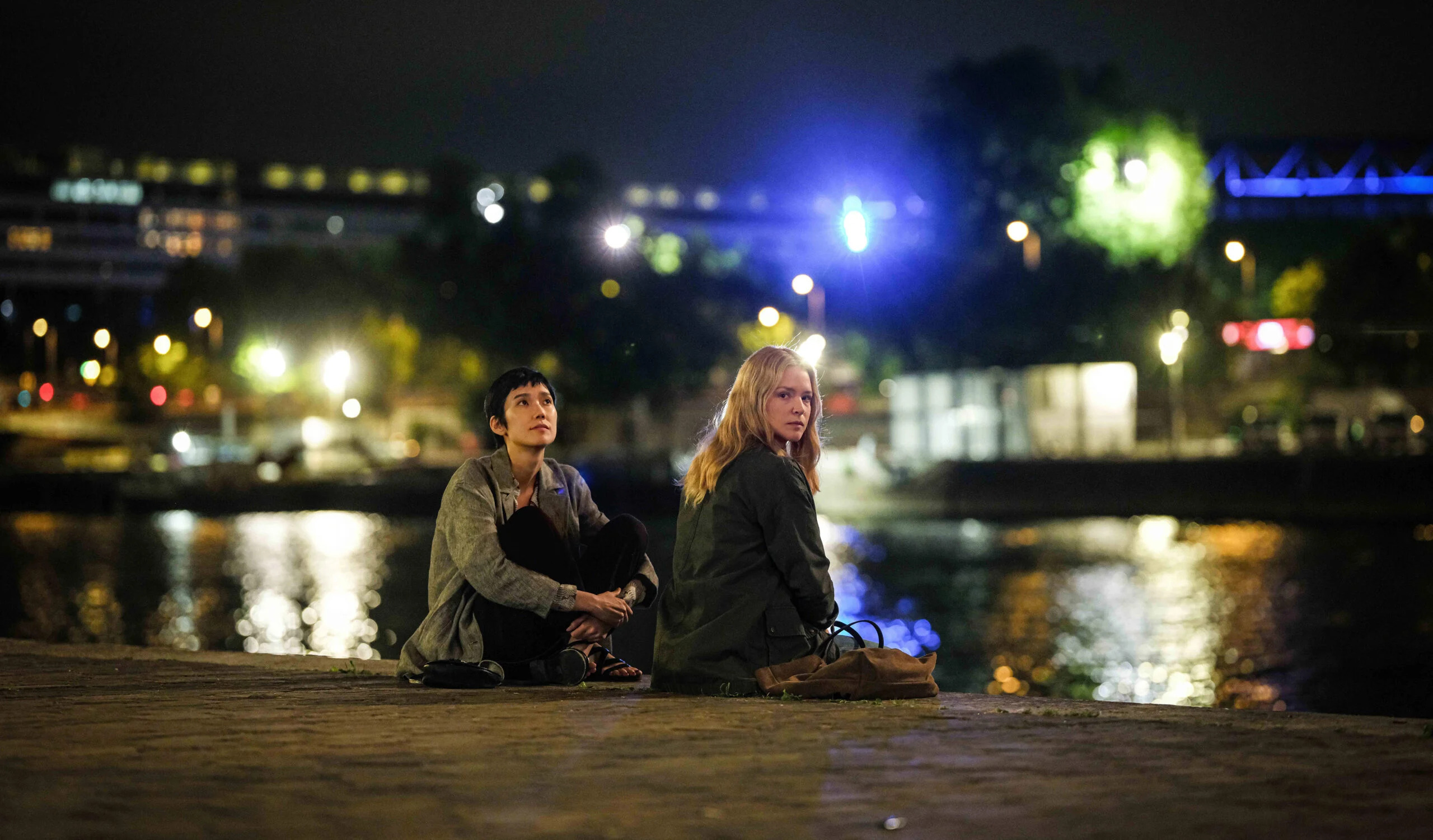
By saying that some things escape us and others happen unexpectedly, Mari expresses an uncontrollable aspect of reality. But this line also suggests two different ways Hamaguchi stages it, between shock and grace. Focused on Marie-Lou, the opening of All of a Sudden shows an accumulation of professional difficulties: the departure of two caregivers, the team complaining about its increased workload due to training periods, and the death of a resident. The steps leading up to her encounter with Mari are then filmed as chance occurrences that could also be read as signs of destiny (as the characters have strikingly similar first names). On the verge of tears, on a tram, Marie-Lou’s smile returns when she sees Tomoki, the autistic grandson of one of Mari’s actors, running joyfully, before a flyer for her play appears from beneath a file as she leaves her office. Playing on both the difference between their nationalities and the fact that the two women studied in each other’s country and share each other’s languages, Hamaguchi stages a kind of friendly love at first sight in long takes that give way to curiosity and mutual listening as they accompany their walk to the banks of the Seine, through a night that leads from the theater to the nursing home.
In Mari’s play about the psychiatric institution and the place of the mentally ill in our societies, Marie-Lou finds a direct echo of her own attempt to put into practice in her nursing home the principles of Humanitude—a method of care based on profound respect for individuals. Without translation for the other audience members, an exchange in Japanese after the performance seals the bond between two women who, as the play states, share the common goal of “making the impossible possible”: even though her doctors have told her she should already be dead, Mari’s will to live intersects with the desire to open a utopian horizon in a reality that seems to be heading toward the worst.
In Passion (2008), a schoolteacher explained to her students that individual violence is merely a response to external social violence. An echo of this idea resonates here, particularly in a scene where Marie-Lou explains to a nurse who asks Tomoki to be quieter that he is only shouting because he is not being treated well. The crucial choice of making Marie-Lou a nursing home director allows Hamaguchi to ground his existential themes in a concrete social reality, which he both documents (the film was shot in a real nursing home) and reshapes through fiction. The filmmaker pursues an orientation that was already noticeable in Evil Does Not Exist, where the unexplained disappearance of a little girl intersected with the description of a glamping project that prioritized economics over ecology and the well-being of the local community. Faced with budgetary pressure that forces reductions in care time and causes distress for both patients and caregivers (the film mentions a scandal that marked French news in 2022 involving a nursing home company named Orpea), Marie-Lou and Mari work to mitigate the violence of institutional policies.
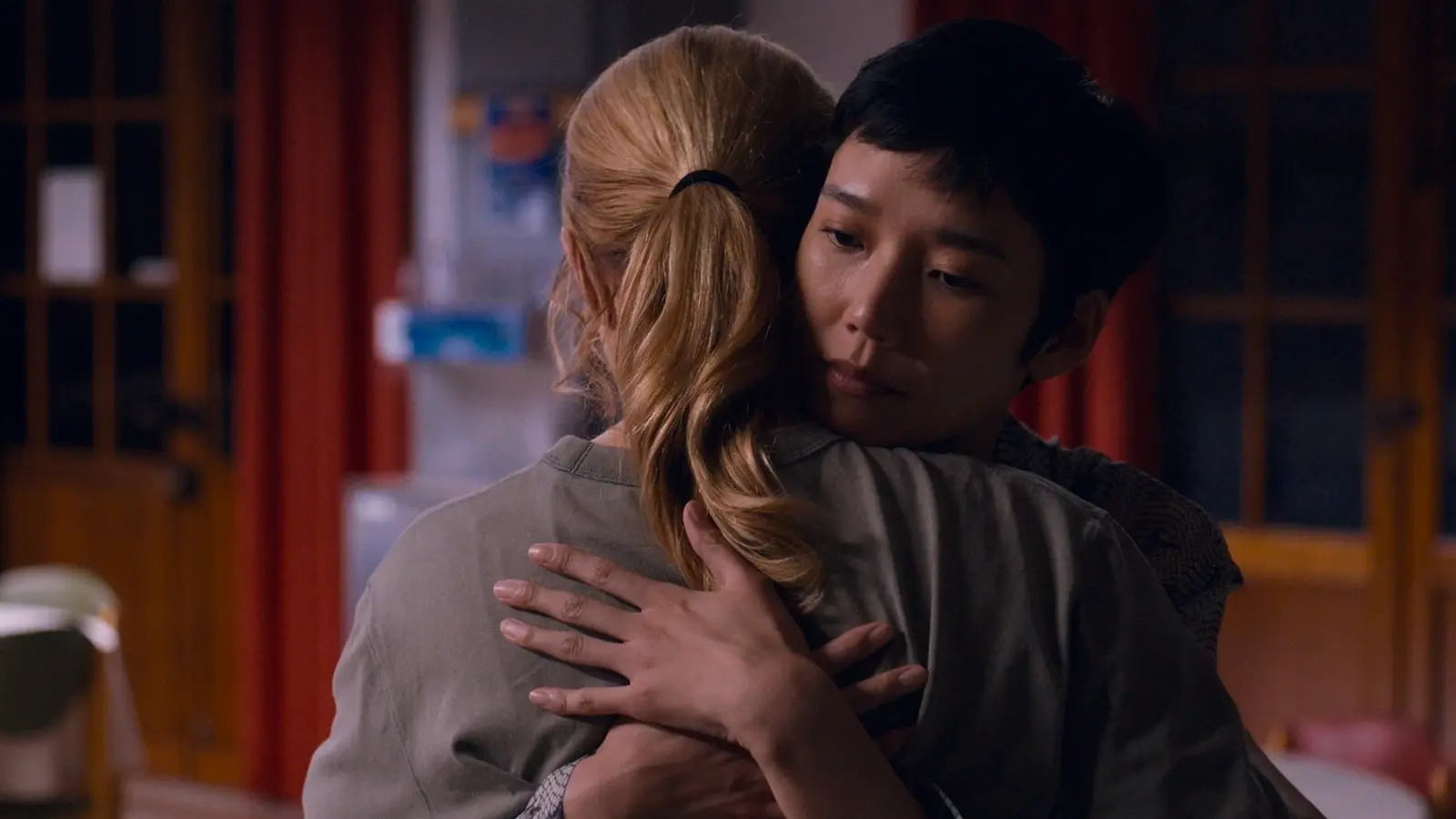
Driven by a quest for genuine communication and ethical relationships with others, one of Hamaguchi’s talents has always been his ability to convey abstract connections through bodily postures and the geometric variations of his shots. This artistry is evident from the very first sequence, where Marie-Lou bends down to meet the gaze of a resident and puts the palm of her hand under the resident’s wrists to gently guide her. The relationship between Marie-Lou and Mari is one of mutual respect, but Mari’s supportive stance is equally apparent when she embraces Marie-Lou and in the shot/reverse-shot sequences that connect their gazes, particularly in a scene where the director addresses her staff about her reform aspirations. Both clear and gentle, the staging fits perfectly with the relational principles of Humanitude (which emphasizes looking, speaking, listening, and verticality) and with workshops offered by Mari within the nursing home, inviting participants to move forward slowly in unison, forming a line and massaging each other’s feet.
But just as Mari seeks to break down the separation between spectators and actors by placing a mirror on the theater stage and putting instruments in the hands of the audience, Hamaguchi seeks to reconfigure and experiment with new relationships. The final minutes thus give rise to a marvelous sequence where the usual separations between care and art, risk and life, and the serious and the trivial, are abolished. Disrupted by Tomoki’s uncontrolled movements, the unexpected appearance of a caregiver’s cat, and a resident’s presence, a performance of Mari’s play in the gardens of the nursing home becomes a scene more vibrant than ever, where apparent chaos leads to a shared joy, capable of transmitting a vitality that transcends the loss and grief that loom.
All of a Sudden unfolds as if poised between two poles, between intellectualism and the mundane, but it reveals itself as a quest for putting theory into practice, thereby becoming all the more capable of softening life by acknowledging the lack of control and the ephemeral nature of existence. While it addresses the importance of maintaining an upright posture for the elderly, it also depicts residents falling and Mari collapsing, overcome by pain. In a particularly dense scene, she uses a diagram to illustrate how capitalism, focused on the immediacy of the here and now, consumes natural and human resources, even disrupting demography and sleep. But these theoretical heights coexist in the film with the mundane occurrence of bird droppings falling. One such incident occurs near the end, landing on Marie-Lou’s face as she awakens from a nap. She then finds amusement in this minor sign of reality’s unpredictability. The film’s philosophy lies both in the characters’ words, in its way of slowing down the pace, and in this kind of laughter. Through these shocks, even in the falls themselves, Hamaguchi finds an opportunity for grace.