많다, 말이A Lot Talk
감독 파스칼 보데Pascale BODET | France | 2026 | 78 min | Documentary | 가능한 영화Possible Cinemas
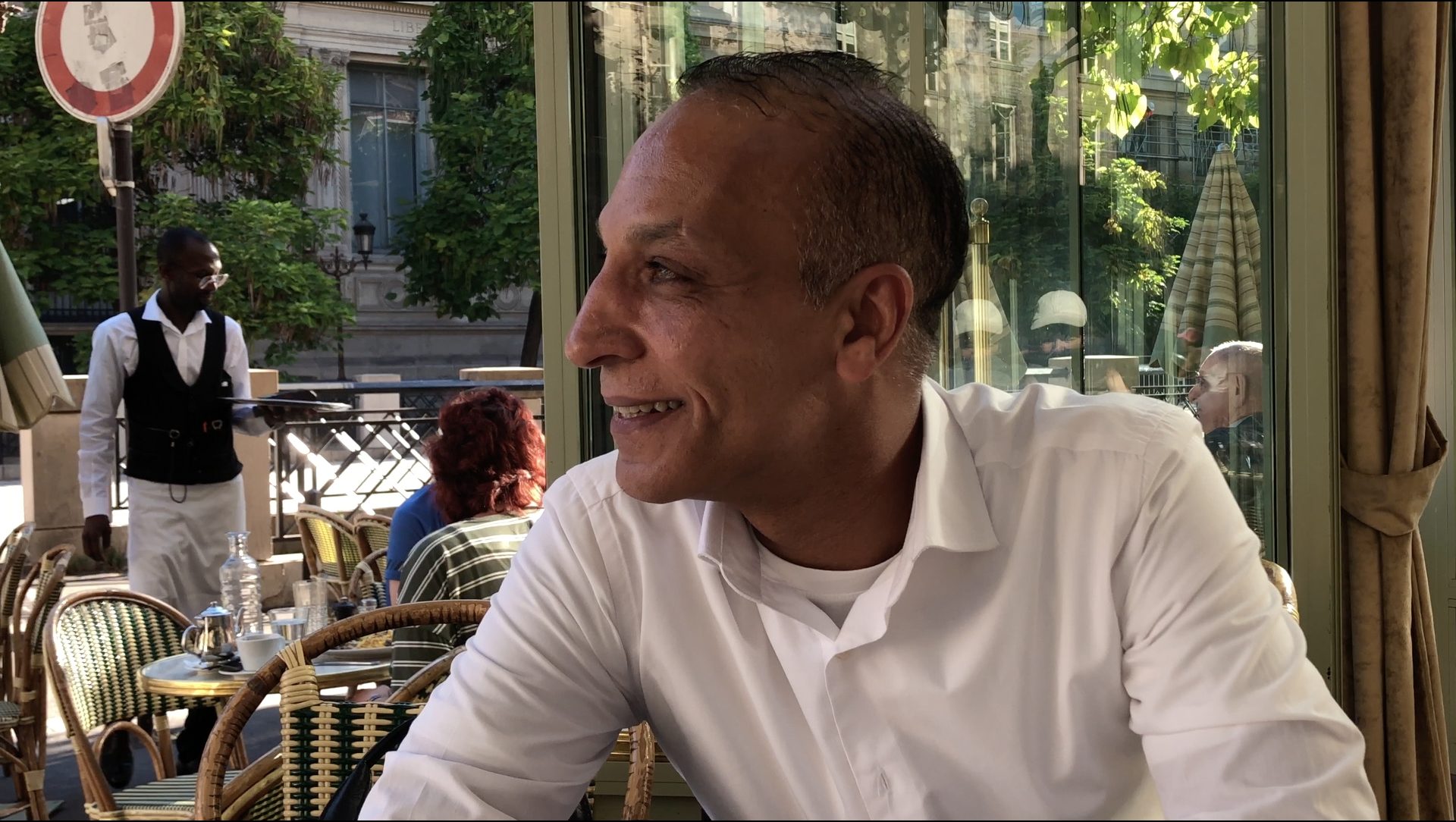
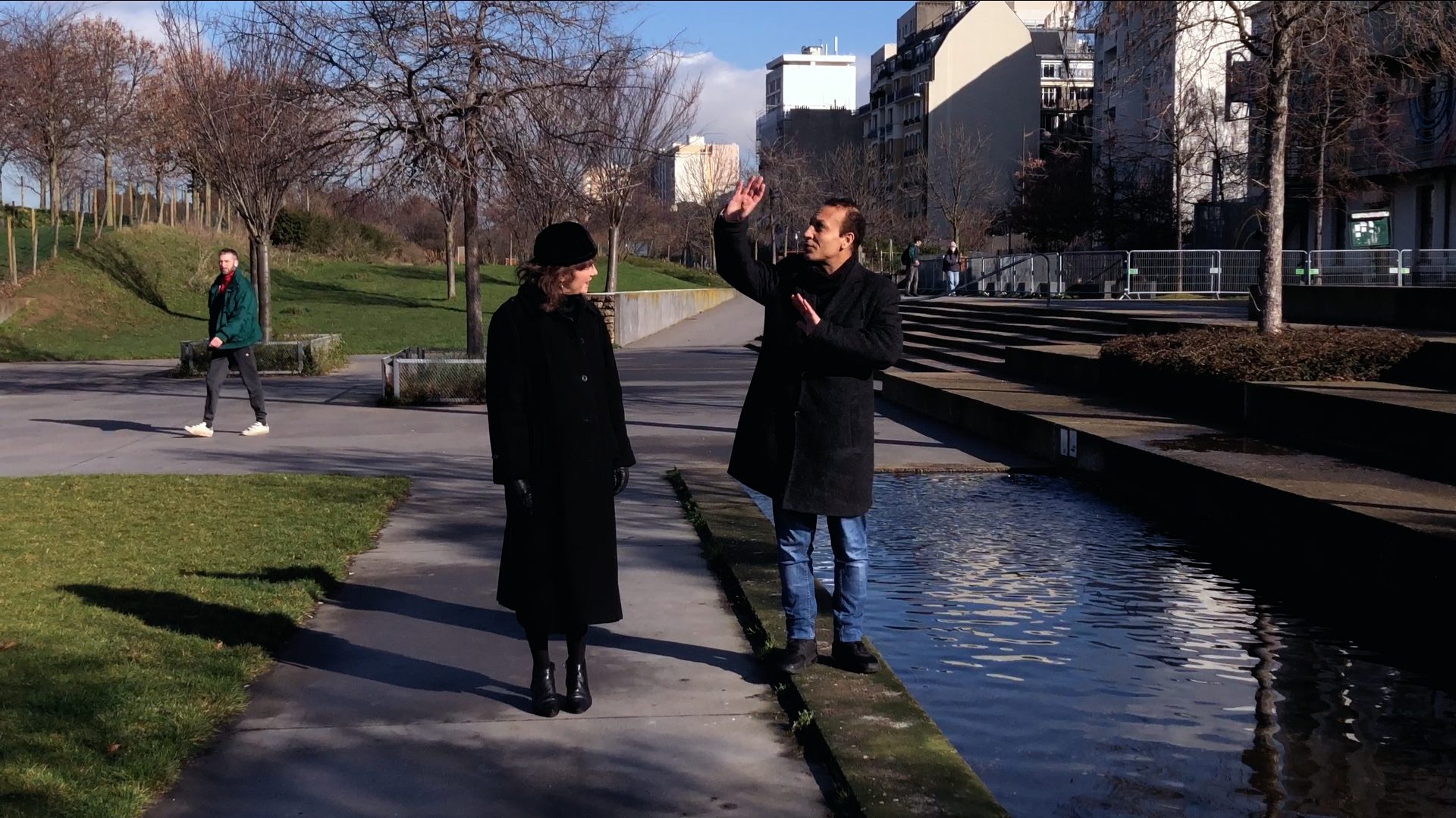
A Lot Talk follows the administrative journey of Amr, an immigrant who, even after 17 years in France, still struggles with the language. Pascale Bodet, both a caring neighbor and a tenacious filmmaker, does not stay behind the camera. She walks beside him, argues with him, and shows how one person’s life intersects with the contradictions of a larger state system. Rather than relying on the usual tragic arc of migrant stories, the film focuses on the energy that emerges where everyday humor and misunderstanding meet. It also captures moments when concerns and anxieties surface within seemingly light conversations and jokes. Where does the journey of these two very different neighbors lead? Can people remain together without fully understanding each other or sharing a common language? Without forcing open the mystery of the other, this film quietly asks what it means to show respect and care for one another in a time shaped by exclusion.
A Lot Talk follows an immigrant’s administrative process, and gradually shows the system around it as well as the relationships involved. For you, is the film closer to a portrait of a person, or to an observation of a larger system?
When a painter paints a portrait of a person, they either paint it against a neutral background or in a setting. I think A Lot Talk is closer to a portrait with a setting and a non-neutral background. The setting is our neighborhood—the streets, the café, and the pastry shop, as well as the garden. The background consists of the venues of the administrative process. However, these venues remain “off-screen” (outside the frame), since the judges and the offices where decisions are made are not filmed. And it becomes a portrait because it is the effects of the administrative process on Amr’s body and soul in the setting of our neighborhood that I have tried to film. But I understand why you’re asking this question, since the system in which Amr is embedded and on which he depends is indirectly observed through him, and this observation of a larger system—namely, migrants’ access to their rights being trampled upon—is part of the film, and this larger system—I wanted to observe it, bear witness to it, and denounce it through Amr’s portrait. I’m glad if his portrait expands into a broader observation: that of a system. I usually choose to film small, everyday, and intimate matters and things, hoping that they will grow in significance and, moreover, lead to a broader discussion.
The film’s basic setup—“Amr is trying to obtain a residence permit, and I help him while documenting the process”—is very minimal. Yet the film takes a more complex path than expected. This seems largely due to Amr himself, since he may not be a very “typical” figure for a migration narrative. Was there a reason you chose this more challenging approach?
Amr is quite a cinematic character. He is full of joy even as he is desperate. He speaks a strange form of French that is barely understandable. The promise of action and change associated with a new administrative process turned out to be a deception, since it took him ages to obtain a single piece of paper. So everything was paradoxical, contradictory, and ultimately difficult. Amr’s life doesn’t fit the “typical” narrative of an immigrant, because he doesn’t seem to be fighting, and I chose not to portray him as a victim. He seems stuck and drowning in passivity, but he is joyful, and my interactions with him were sometimes lighthearted—like when we talked about clothes—or often centered on everyday conversations and jokes. So yes, it was a challenging approach.
I imagine the production process, including filming, was not easy. In many scenes, you seem to be directing and filming at the same time. Could you share a bit more about the production conditions, such as the schedule, the duration of the shoot, and the size of the crew?
Filming took place from March 2021 to September 2023. The schedule unfolded step by step, in accordance with these administrative decisions: sometimes I filmed by myself because the crew wasn’t available to capture the “key” moments, such as the day he received his receipt or the day he obtained his permit; most of the time, when documenting the impact of the process on Amr’s daily life, either a cameraman was filming and a sound engineer was present as well, or I filmed myself with the sound engineer. At the start of filming, I was worried that the footage shot by the cameraman and the footage I shot wouldn’t match up, but it turned out not to be a problem—I’m not sure why. The entire film was shot with an iPhone 8 Plus, without a boom pole, so that we were as light and “invisible” as possible. I love filming myself because it’s very intuitive—the way you engage your body, the way you frame the shot, the way you react both as a cinematographer and as a character (my character in this case). When I filmed, I could capture Amr’s expressions, and these came directly into the lens of the camera. When I filmed, Amr always had a tendency to move closer and closer to the camera, so I had to step back, and sometimes his shots got very close. For this film, I felt it was necessary for me to appear with him in front of the camera, so that viewers could recognize me as a quintessential “bobo” fitting the sociological profile of women who help immigrants, and gauge the social and cultural differences between Amr and me while seeing us together, side by side, arguing, making small talk, repeating things and discussing important matters, but through everyday neighborhood life.
You keep a certain distance from Amr in front of the camera, while also exploring your relationship throughout the film. Did you see your conversations with Amr as “scenes”? If so, how did you think about how far you could intervene during filming?
We are neighbors, not friends or lovers. We barely understand each other, but he agreed to play the lead in my film, and I helped him with his paperwork. And I did have some scenes in mind. In fact, during editing, we arranged things so that the film progresses scene by scene. When the administrative process stalled or was delayed, I would meet him and ask questions, and each conversation was tied to a walk or a stop at a café or pastry shop. For example, the sequence where, in the garden, I have him repeat a recorded text was planned out with camera placements and framing values, but it’s pretty much the only scene that was staged precisely. Otherwise, I’d throw out ideas, and they’d either lead to something or not. I was very involved, since I’m a character in the film myself. The idea of filming a documentary based on scenes in which I was directly involved was important, because when I was acting, Amr and I were on the same level in terms of performance. In front of the camera, you can’t fully control what you say or how you are, and that placed us on equal footing within the possibilities of misunderstanding and understanding. I wasn’t the director of the film in control of the situation. I was reacting to my own ideas, which were brought into play as if in a sort of ongoing happening. And as you’ve understood, the entire film rests on our mutual efforts to understand one another. The foundation of the film is that there are no translators by our side, so when, for example, Amr’s Algerian, Arabic-speaking friend Mokhtar was invited by him to join the film, I took the opportunity to ask Amr questions that I wouldn’t have asked if Mokhtar hadn’t been there. In the original French version, no matter what language is spoken, there are no subtitles at all.
Arabic, French, and broken French are mixed and often misaligned throughout the film. In most scenes, you try to communicate the situation clearly to Amr, but at times you simply observe these tangled conversations. How did you balance explaining and correcting with just letting things happen?
I see my character as a representative of the average French viewer and also as a mediator. While filming and acting in the movie, I realized that it might be helpful to summarize the context of the administrative process and make it clear. For instance, at the lawyer’s office, I myself wanted to understand how the French state can demand proof of legal employment while not allowing immigrants to work legally—which is complete nonsense—so I asked the lawyer to explain how that could be. I wanted an answer for my own sake, but I also figured the average viewer would like to know. Sometimes, Amr was the one who created the situations, for instance when he was afraid his file had been stolen in our neighborhood and then asked about French citizenship. Karim, the pastry chief, was here, so I let the situation happen. I had plenty of topics to ask him about—especially in the second part of the film: why didn’t he get married? The evidence that he doesn’t want to learn French, the fact that he didn’t go to school for a long time when he was young. It was quite a weaving together of many issues, questions, scenes, and situations to create the portrait.
The film carries a sense of humor throughout. At the same time, as Amr’s difficulty with French—despite having lived in France for 17 years—becomes more visible, the humor can feel more layered for the audience. I’m curious whether this contrast in emotions was something you intended, or if it emerged naturally during filming.
As I summarized the film in the synopsis, “A funny guy who has lived in France for 17 years without speaking French is a comedy. A guy going on 50 who cannot speak French and keeps talking about his papers is a drama,” I wanted to find a lighthearted, undramatic tone to talk about a dramatic situation. The whole challenge of A Lot Talk was finding that tone. Amr sometimes has a sense of humor about himself and what happens to him; he’s often funny, as is Karim, so everything was in place for the situations to be tinged with the humor I was looking for. I would define humor as a commentary on reality, a way of creating some distance from that reality, and of challenging established beliefs. Like when Amr asks me to read and reread the email the lawyer sent him, and he manages to make me doubt what I’m reading.
Amr seems to be in a position where he neither fully resists nor fully adapts to the system. What do you think this “in-between state” tells us about migration today?
In my view, A Lot Talk is the story of failed integration and a huge waste, because the French government does everything it can to prevent immigrants from integrating. The latest legal provisions regarding language proficiency further exclude undocumented immigrants from any possibility of successful integration. After 17 years of living without papers, it’s easy to imagine that Amr is very tired. In the garden sequence with the photos, I wanted us both to be in wide shots, joking around and strolling, like a couple we might have been if his situation had improved years earlier. I had in mind something akin to a dream—what might have been but isn’t.
Hostility and exclusion toward migrants are increasing around the world, including in South Korea. One of the most compelling elements in your film is that you and Amr stay together until the end. Where do you think the strength came from to go through this journey side by side, even without fully understanding each other? And after finishing the film, are there any questions that still remain with you?
The strength came from my belief that we need to talk to one another, not burn bridges, reach out to others, show solidarity, and find common ground even if we live in a Tower of Babel. My attachment to Amr was spontaneous: I found him handsome and funny, and I loved the way he expressed himself, not only through the words of this “new French,” but also through his gestures and his own unique expressiveness. It was a thin starting point! Super minimal. But I sensed that with a character, a setting, and the promise of action, there was a film to be made. That said, the film does not lift the veil of mystery surrounding Amr. His mystery is, I believe, even greater by the end of the film. Moreover, in the final sequence of the French class, he is returned to anonymity; he is one among many. The answers to the questions I may continue to ask myself belong to him. In the film, you can see that I have a hard time accepting that he doesn’t speak French, and I try with all my might to get him to learn, even though he doesn’t want to. The fact that he didn’t want to learn challenged my convictions, shaped by my upbringing, my culture, and my social class. It bothered me that he didn’t want to gain a better command of French to be independent, to avoid getting taken advantage of at work, to communicate better—including with me—but that’s how it is. It’s his freedom to resist and refuse. At least, that’s shown in the film. And making the film allowed me to understand—or at least to gain some insight into his refusal. In the film, there is what he chose to show us, what I chose to show to the audience, and the melancholy that emerges, I believe, in the end, is part of what we experienced together. Amr appreciated that the film traces every stage of his trials. A film between neighbors was not meant to uncover secrets or elicit confidences. That was the hallmark of our journey side by side: respecting the other, their shortcomings, but also their privacy.